-
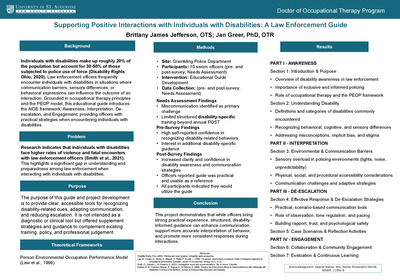
Supporting Positive Interactions with Individuals with Disabilities: A Law Enforcement Guide
Brittany James Jefferson and Mary Jan Greer
This capstone project developed an educational guide to support law enforcement officers in creating safe and effective interactions with individuals with disabilities. A needs assessment informed the guide’s development, which was grounded in occupational therapy principles and the Person Environment Occupation Performance (PEOP) model. The guide was implemented within a law enforcement setting and evaluated through officer feedback. Findings indicated strong baseline experience among officers, with added value in providing structured strategies to support communication, interpretation, and de-escalation. This project highlights the role of occupational therapy in promoting inclusive, community-based practice.
-
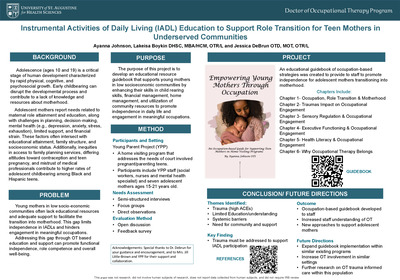
Instrumental Activities of Daily Living (IADL) Education to Support Role Transition for Teen Mothers in Underserved Communities
Ayanna Johnson, Lakeisa Boykin, and Jessica De Brun
This project focuses on researching the unique challenges faced by teenage mothers in low-socioeconomic communities and developing occupation-based strategies to support their transition into motherhood. The aim was to enhance their independence and effectiveness in instrumental activities of daily living (IADLs), such as child-rearing, home and financial management, community engagement, and meal preparation.
-
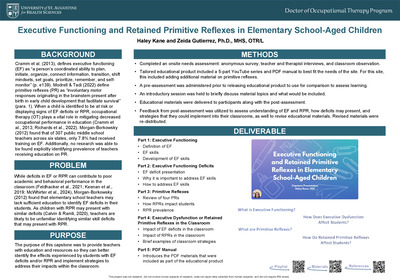
Executive Functioning and Retained Primitive Reflexes in School-Aged Children
Haley A. Kane and Zeida Gutierrez
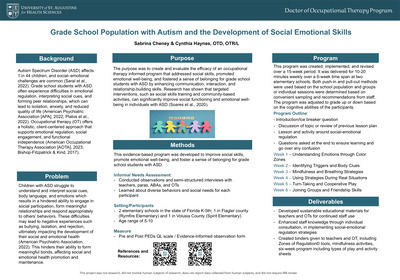
This project aimed to provide teachers with education on EF and RPR and to improve access to educational materials. The education provided definitions of EF and RPR, what deficits in each may present in the classroom, and classroom strategies to mitigate the impact of the skills affected by these deficits. This educational program improved understanding of EF and RPR, evidenced by knowledge-based questions. These materials also increased awareness of RPR and their effects on students, as evidenced by responses to short-answer questions. These results align with the long-term goal of improving the academic performance of students impacted by EF deficits and RPR.
-
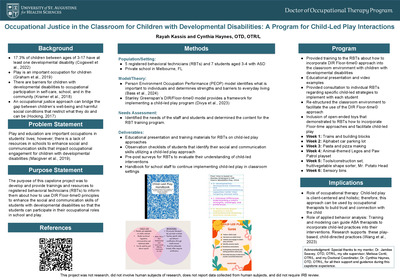
Occupational Justice in the Classroom for Children with Developmental Disabilities: A Program for Child-Led Play Interactions
Rayah Kassis and Cynthia Haynes
Play and education are important occupations in students’ lives; however, there is a lack of resources in schools to enhance social and communication skills that impact occupational engagement for children with developmental disabilities. The purpose of this capstone project is to develop and provide resources to registered behavioral technicians (RBTs) that will inform them about how to use child-led principles to enhance the social and communication skills of students with developmental disabilities so that the students can meet their occupational roles in school and play participation.
-
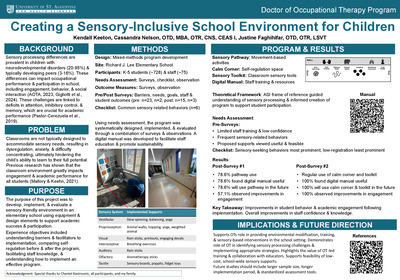
Creating a Sensory-Inclusive School Environment for Children
Kendall L. Keeton, Cassandra Nelson, and Justine Faghihifar
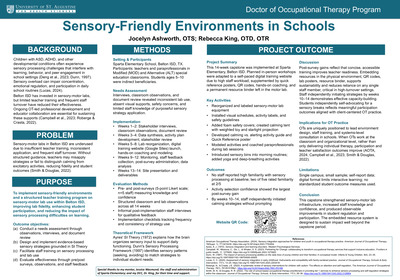
This mixed-methods program development capstone project aimed to assess whether structured sensory supports improve academic engagement and student behavior in the school setting. A sensory pathway, calm corner, and sensory toolkit were designed, implemented, and evaluated within an elementary school. A digital manual was also created to facilitate staff education and long-term sustainability of the program. Findings from pre- and post-surveys and observation suggest potential improvements in academic engagement, student behavior, and staff knowledge following program implementation.
-
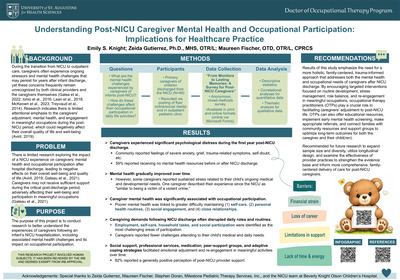
Understanding Post-NICU Caregiver Mental Health and Occupational Participation: Implications for Healthcare Practice
Emily S. Knight, Zeida Gutierrez, and Maureen Fischer
This capstone project explored the mental health challenges experienced by caregivers following their infant’s discharge from the neonatal intensive care unit (NICU) and the resulting impact on occupational participation. Using a mixed-methods design, data was collected through an anonymous survey of 46 post-NICU caregivers, incorporating both quantitative and qualitative responses. Findings revealed that caregivers commonly experienced significant mental health concerns, including stress, anxiety, and depressive symptoms, particularly within the first year following discharge. Although results demonstrated a statistically significant improvement in mental health over time, many caregivers reported limited access to mental health resources and professional support. Importantly, the study identified a meaningful relationship between caregiver mental health and occupational participation, indicating that poorer mental health was associated with decreased engagement in daily activities, including self-care, social participation, and leisure. Qualitative findings further highlighted themes of role imbalance, emotional burden, and challenges in managing daily routines. Educational resources were also developed and disseminated to healthcare providers to enhance awareness of caregiver needs and promote family-centered care. Overall, this project addresses a critical gap in the literature by emphasizing the importance of supporting both the psychological well-being and occupational engagement of post-NICU caregivers to improve long-term outcomes for families.
-
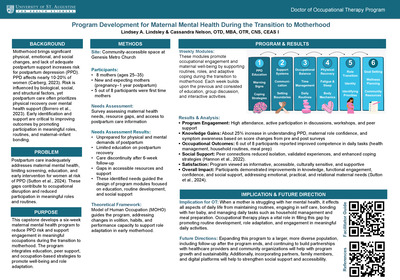
Program Development for Maternal Mental Health During the Transition to Motherhood
Lindsey A. Lindsley and Cassandra Nelson
The transition to motherhood can be both rewarding and challenging, with many women experiencing increased vulnerability to postpartum depression (PPD). This capstone project focused on developing and implementing a six-week maternal mental health program designed to support postpartum women through education, occupational engagement, and peer connection. Grounded in the Model of Human Occupation (MOHO), the program used a hybrid format combining in-person and virtual sessions to improve accessibility. Program outcomes were evaluated using surveys, the Occupational Self Assessment (OSA), and participant feedback. Participants demonstrated increased knowledge of postpartum mental health, greater confidence in their maternal roles, and improved ability to recognize early signs of PPD. Many also reported improvements in daily routines and occupational engagement, particularly in areas such as health management and household tasks. In addition, participants highlighted the value of peer support, noting reduced feelings of isolation and increased use of coping strategies. Overall, this program provided a structured, supportive environment that promoted maternal well-being and facilitated adjustment to the postpartum role.
-
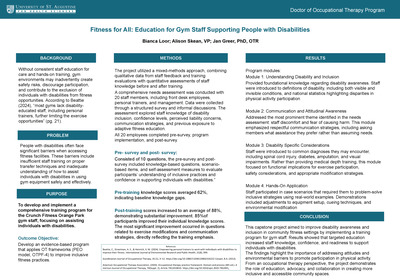
Fitness for All: Education for Gym Staff Supporting People with Disabilites
Bianca Loor, Mary Jan Greer, and Alison Skean
This capstone project, “Fitness for All: Education for Gym Staff Supporting People with Disabilities,” focuses on improving accessibility and inclusion within community fitness settings through staff education. Individuals with disabilities often encounter barriers in gyms due to limited staff training, lack of confidence, and insufficient knowledge of adaptive fitness practices.
To address this gap, a comprehensive, evidence-based training program was developed and implemented for gym staff at Crunch Fitness Orange Park. The program incorporated occupational therapy frameworks, including the Person-Environment-Occupation (PEO) model and the Occupational Therapy Practice Framework (OTPF-4), to promote inclusive and client-centered fitness practices.
Using a mixed-methods approach, the project evaluated staff knowledge, confidence, and attitudes before and after training. The program included modules on disability awareness, communication strategies, condition-specific considerations, and hands-on application. Results demonstrated a significant improvement in staff knowledge (from 62% to 88%) and increased confidence in supporting individuals with disabilities.
This project highlights the critical role of education, advocacy, and interdisciplinary collaboration in reducing barriers and fostering inclusive fitness environments. It underscores the contribution of occupational therapy in promoting equitable access to health and wellness opportunities for all individuals.
-
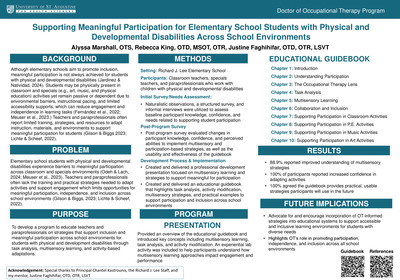
Supporting Meaningful Participation for Elementary School Students with Physical and Developmental Disabilities Across School Environments
Alyssa Marshall, Rebecca King, and Justine Faghihifar
Elementary school students with physical and developmental disabilities often experience barriers to meaningful participation across school environments. This capstone project aimed to address these barriers by equipping teachers and paraprofessionals with practical occupational therapy-informed strategies to best support student engagement, inclusion, and independence in school activities. The program included delivering a professional development presentation and an educational guidebook highlighting key concepts such as task analysis, activity modification, multisensory learning, and environmental adaptations. Findings from the post-program survey and informal interviews indicated increased participant knowledge, confidence, and perceived ability to support meaningful participation, highlighting the value of occupational therapy-informed training and resources in school-based practice.
-
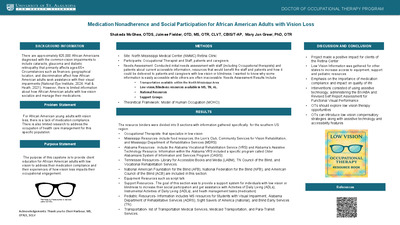
Medication Nonadherence and Social Participation for African American Adults with Low Vision
Shakeda McGhee; Mary Jan Greer PhD, OTR; and Jaimee Fielder
The concept of this capstone is to analyze how quality of life (social participation, health management) is affected in adults ages 18-55 with low vision/blindness with conditions to include diabetic retinopathy, glaucoma, and cataracts.
-
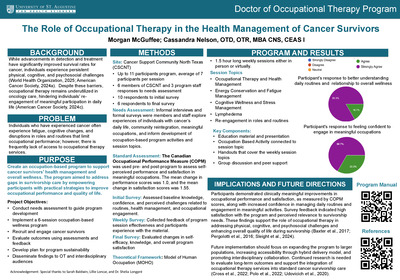
The Role of Occupational Therapy in the Health Management of Cancer Survivors
Morgan McGuffee and Cassandra Nelson
Cancer survivorship often results in ongoing physical, cognitive, and psychosocial challenges that disrupt daily routines, roles, and participation in meaningful activities. Despite these needs, occupational therapy remains underutilized in survivorship care. This capstone project, completed at the Cancer Support Community North Texas, developed and implemented a 6-week occupation-based wellness program to support re-engagement in daily life, promote health management, and enhance overall quality of life
-
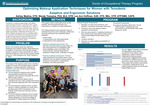
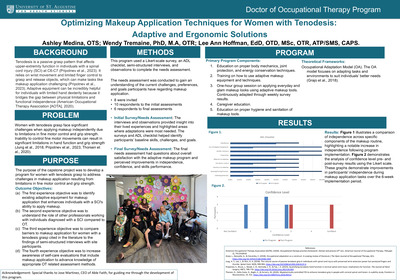
Optimizing Makeup Application Techniques for Women with Tenodesis: Adaptations and Ergonomic Solutions
Ashley J. Medina, Wendy Tremaine, and Lee Ann Hoffman
To enhance independence in makeup application for women utilizing a tenodesis grasp, Ashley Medina, OTS, in collaboration with Able Faith, Inc., developed and presented a capstone poster outlining a targeted program of adaptive strategies and ergonomic solutions. This program was designed to address the unique functional challenges experienced by women with spinal cord injuries (SCIs) while promoting autonomy and confidence in daily self-care routines.
The experience objectives included: (1) identifying existing adaptive equipment that supports individuals with SCIs in completing makeup application tasks; (2) examining and understanding the roles of interdisciplinary team members working with individuals with SCI in comparison to occupational therapy; (3) comparing barriers to makeup application for women with tenodesis grasp reported in current literature with findings gathered through semi-structured interviews with site participants; and (4) increasing awareness and utilization of self-care evaluations to strengthen knowledge of appropriate occupational therapy assessment methods. These objectives guided both the development and evaluation of the program.
Key project deliverables included a comprehensive digital manual that supports both implementation and long-term sustainability of the program. The manual provides education on proper positioning, energy conservation, and joint protection techniques to reduce strain and improve efficiency. It also includes detailed instruction on the use of adaptive equipment, caregiver education to promote appropriate assistance while maintaining client independence, and step-by-step video demonstrations illustrating how to modify the makeup routine. Additionally, a curated list of recommended tools, including cost breakdowns and purchasing links, was provided to improve accessibility and ease of replication.
Overall, this program demonstrates how occupational therapy interventions can effectively bridge the gap between physical limitations and functional independence through the integration of adaptive equipment and client-centered strategies (American Occupational Therapy Association [AOTA], 2020). Furthermore, it highlights the importance of addressing meaningful and often overlooked activities of daily living, such as makeup application, to support identity, self-esteem, and quality of life. By promoting inclusive and adaptive approaches to self-care, this program contributes to a more holistic understanding of independence and participation for individuals with SCIs.
-
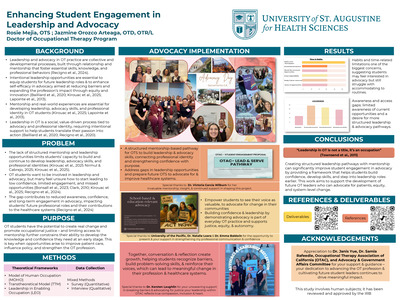
Enhancing Student Engagement in Leadership and Advocacy
Rosanoemi A. Mejia and Jazminne Orozco Arteaga
Occupational therapy has a unique capacity to foster social change and occupational justice. Leadership and advocacy are essential components of the daily academic practice for occupational therapists. However, leadership development within the field is largely socially driven, and students often lack access to structured, mentored pathways that would empower them to speak up and engage in advocacy. This capstone project aimed to fill this gap by addressing the shortage of coordinated mentorship and leadership development opportunities, which hinder advocacy efforts and professional growth. The study employed a mixed-methods approach, involving occupational therapy students in quantitative Likert-scale surveys and qualitative semi-structured interviews to explore motivation, routines, environment, performance, leadership awareness, identity, accountability, perceived barriers, and readiness for leadership. Descriptive statistics analyzed survey data (N = 17), while Braun and Clarke's (2006) thematic analysis was used for interview data (n = 3). Results indicated that students are interested in advocacy and leadership but face barriers such as limited time, fear, lack of information, role ambiguity, unclear guidance, and a desire for mentorship and organized opportunities. The study concluded that students are eager for advocacy but need clear pathways, practical support, encouragement, and opportunities aligned with their academic commitments. These insights led to the creation of ESLA, a structured leadership and advocacy program designed to enhance confidence, professional identity, and engagement in leadership among occupational therapy students.
-
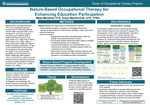
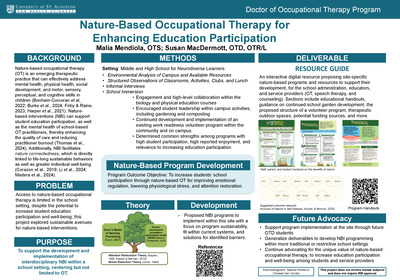
Nature-Based Occupational Therapy for Enhancing Education Participation
Malia M. Mendiola and Susan Macdermott
The project developed nature-based interventions (NBI) resources to support the education participation of neurodivergent high school students. The objective was to increase students’ school participation through nature-based OT for improving emotional regulation, lowering physiological stress, and attention restoration. Nature immersion was explored through the school's OT program, as well as interdisciplinary collaboration with teachers, other services providers, and community partners. The resource guide focused on benefits, impacts, and practical implementation of NBI for the Winston School and for the broader school-based occupational therapy community.
-
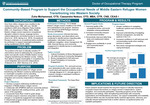
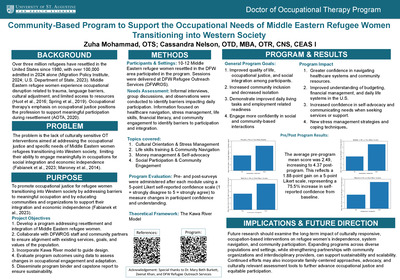
Community-Based Program to Support the Occupational Needs of Middle Eastern Refugee Women Transitioning into Western Society
Zuha A. Mohammad and Cassandra Nelson
Middle Eastern refugee women resettling in Western societies often experience barriers that disrupt participation in meaningful occupations, including language barriers, unfamiliar systems, financial challenges, and social isolation. These challenges can limit independence and community participation during the resettlement process. Occupational therapy is well-positioned to address these barriers through culturally responsive, occupation-based interventions.
This capstone project developed and implemented a community-based program designed to support Middle Eastern refugee women during early resettlement. The program focused on key areas including system navigation, financial literacy, home safety, stress management, self-advocacy, and community engagement. Educational sessions and practical activities were used to promote skill development, confidence, and access to community resources.
Findings suggest that participants demonstrated increased confidence in navigating daily systems and engaging in meaningful occupations. This project highlights the role of occupational therapy in promoting occupational justice and supporting successful community integration for refugee populations.
-
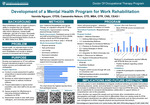
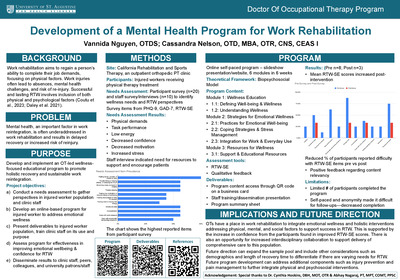
Development of a Mental Health Program for Work Rehabilitation
Vannida M. Nguyen and Cassandra Nelson
Work-related injuries often result in decreased work performance and extended recovery time. This can lead to mental health challenges and a risk of re-injury. Typical work rehabilitation focuses on physical recovery while overlooking psychosocial factors. This capstone project developed a wellness program to support emotional wellness and improve return-to-work (RTW) outcomes. The program incorporated educational content, coping strategies, and interventions targeting emotional wellness for injured workers receiving physical therapy. Occupational therapy has the ability to address both physical and psychosocial factors and increase interdisciplinary efforts during work rehabilitation. Improved confidence reflected in the self-reported RTW-SE scores suggests that occupational therapy can promote sustainable work reintegration after an injury.
-
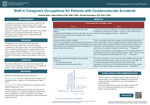
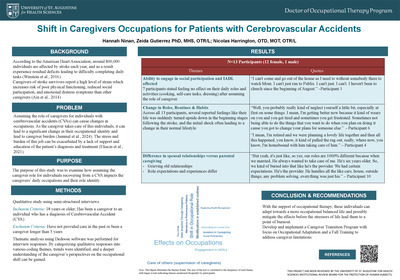
Shift in Caregivers Occupations for Patients with Cerebrovascular Accidents
Hannah M. Ninan and Zeida Gutierrez
The purpose of this capstone is to research the impact of assuming the caregiver role for individuals recovering from a CVA on the caregivers’ occupations and their occupational balance. Acquiring this information allows for a deeper understanding of its impacts and informs the implementation of support strategies and interventions to mitigate burnout within the first year of caregiving.
-
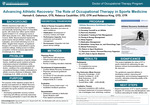
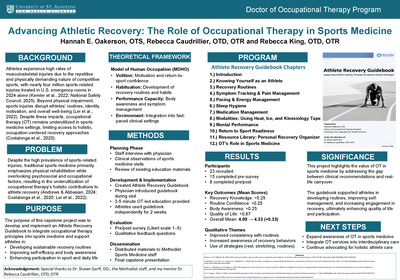
Advancing Athletic Recovery: The Role of Occupational Therapy in Sports Medicine
Hannah E. Oakerson, Rebecca King, and Rebecca Caudrillier
This capstone project aimed to assess whether an occupation-based educational program could improve recovery engagement, self-efficacy, and quality of life in athletes following sports-related injuries. An Athlete Recovery Guidebook was designed, implemented, and evaluated within an outpatient sports medicine setting. The guidebook provided structured education on recovery routines, symptom management, and health habits, while supporting integration into daily life. Findings from pre- and post-surveys and qualitative feedback suggest improvements in recovery knowledge, confidence, body awareness, and overall quality of life following program implementation.
-
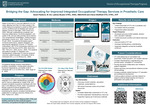
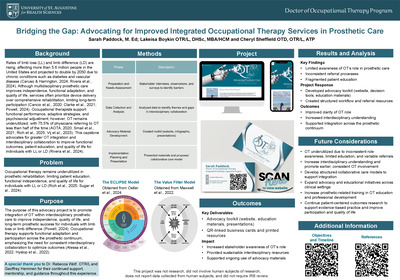
Bridging the Gap: Advocating for Improved Integrated Occupational Therapy Services in Prosthetic Care
Sarah A. Paddock, Keisa Boykin, and Cheryl Sheffield
This advocacy project focused on advocating for increased OT services in prosthetic care from pre-amputation to post-amputation.
-
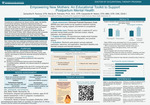
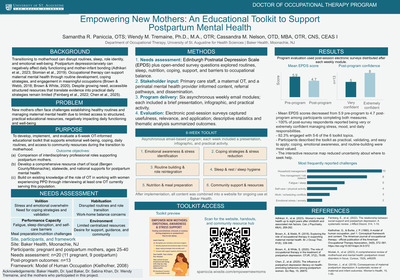
Empowering New Mothers: An Educational Toolkit to Support Postpartum Mental Health
Samantha R. Paniccia, Wendy Tremaine, and Cassandra Nelson
Postpartum mental health challenges can negatively impact daily functioning, routines, and overall well-being during the transition to motherhood. This capstone project aimed to develop and implement an occupational therapy–informed educational toolkit to support emotional well-being, coping, and occupational engagement among new mothers. A mixed-methods approach was used, including a needs assessment with the Edinburgh Postnatal Depression Scale (EPDS) and survey data, as well as post-program evaluations to assess confidence, coping, and participation.
Interventions included a six-week asynchronous email-based program consisting of educational modules, infographics, and practical strategies targeting emotional awareness, stress management, routine development, sleep, nutrition, and access to community resources. Stakeholder input from healthcare providers helped guide development and ensure clinical relevance. The Model of Human Occupation (MOHO) framework supported the project by addressing volition, habituation, performance capacity, and environmental factors influencing maternal health.
Findings indicated decreased EPDS scores and increased participant confidence in managing stress, mood, and daily responsibilities. Participants reported the toolkit to be practical, validating, and easy to integrate into daily life, with high engagement across modules. This project highlights the role of occupational therapy in supporting maternal mental health through accessible, evidence-based, and client-centered interventions. Future directions include expanding access to the toolkit, increasing interdisciplinary collaboration, and evaluating long-term outcomes.
-
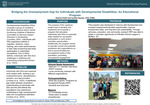
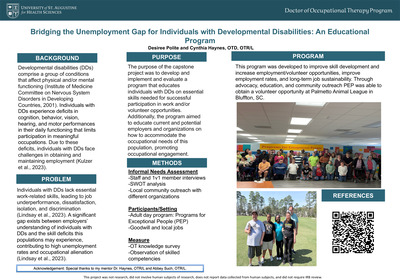
Bridging the Unemployment Gap for Individuals with Developmental Disabilities: An Educational Program
Desiree Polite and Cynthia Haynes
Improving work readiness skills for individuals with developmental disabilities to increase work/volunteer opportunities.
-
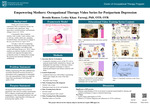
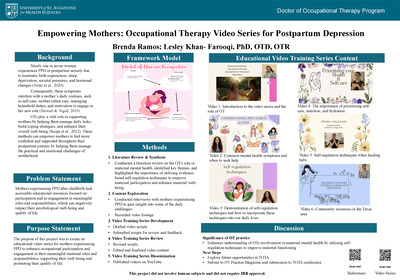
Empowering Mothers: Occupational Therapy Video Series for Postpartum Depression
Brenda J. Ramos and Lesley Khan-Farooqi
The purpose of this project is to educate mothers experiencing PPD on the importance of utilizing self-regulation techniques to get through their day-to-day tasks.
-
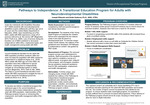
Pathways to Independence: A Transitional Education Program for Adults with Neurodevelopmental Disabilities
Joseph Ribaudo and Zeida Gutierrez
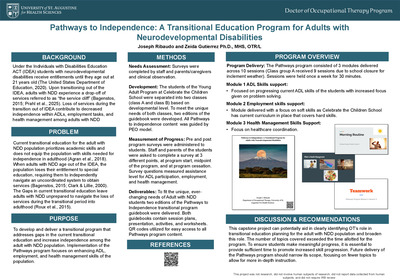
Pathways to Independence is a transitional education program implemented into the young adult program of a school for individuals with neuro developmental disabilities (NDD). The objective of program implementation was to progress the skills of the adult with NDD students to promote increased independence upon the transition out of IDEA services. The program was delivered to 20 adult with NDD students ranging from 18-21 years old.
-
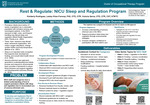
Rest & Regulate: NICU Sleep and Regulation Program
Kimberly Rodriguez, Lesley Khan-Farooqi, and Victoria Serna
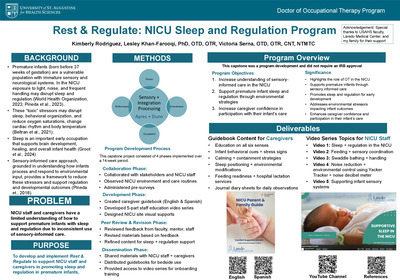
Premature infants (bord before 37 weeks of gestation) are exposed to sensory-rich neonatal intensive care unit (NICU) environments that may disrupt sleep and self-regulation. Sleep is a critical early occupation that supports neurodevelopment, physiological stability, and overall infant health. This capstone project developed and implemented Rest and Regulate, a sensory-informed occupational therapy (OT) program designed to support sleep and regulation in premature infants through environmental modifications, individualized sensory strategies, and caregiver education. Guided by the Person-Environment-Occupation-Performance (PEOP) model, Ayres Sensory Integration (ASI), and Dunn's Sensory Processing Framework (DSPF), the program translated evidence-based sensory principles into practical NICU routines. Key components included staff education through a video training series, bedside caregiver guidebooks, and environmental supports targeting noise, lighting, and handling. Post-training feedback indicated increased staff confidence in recognizing infant cues, modifying environmental stimulation, and implementing sensory-informed strategies. Findings suggest that integrating education, environmental awareness, and interdisciplinary collaboration supports improved caregiving practices and promotes infant sleep and regulation in the NICU.
-
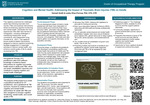
Cognition and Mental Health: Addressing the Impact of Traumatic Brain Injuries (TBI) on Adults
Hannah E. Smith; Lesley Khan-Farooqi; and Anne McDonnell, MPA, OTR/L, CBIST
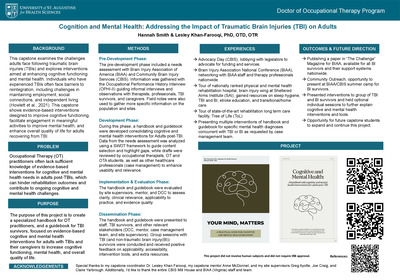
This project addresses cognitive and mental health challenges in adults with traumatic brain injuries (TBI). It developed evidence-based resources, including a clinician handbook and user-friendly survivor guidebook - using research, interviews, and observations. The materials were refined with expert feedback and support improved interventions, education, and quality of life for individuals with TBIs, and their caregivers.
Printing is not supported at the primary Gallery Thumbnail page. Please first navigate to a specific Image before printing.