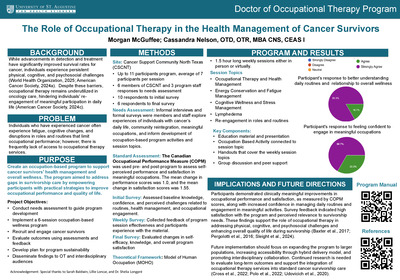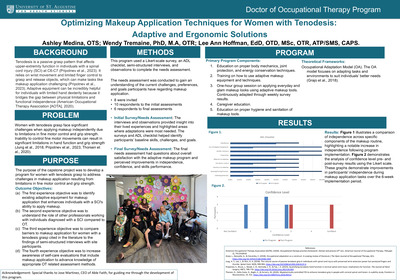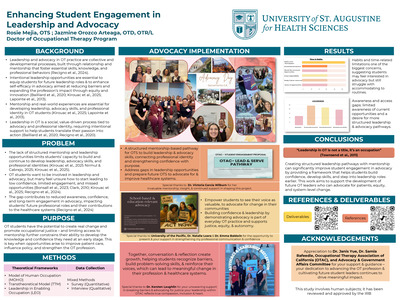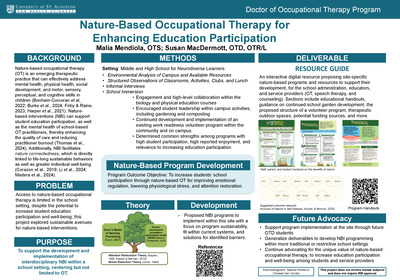

-
Language Barriers in the Healthcare System
Gulten Altunbulak, Rebecca King, and Lee Ann Hoffman
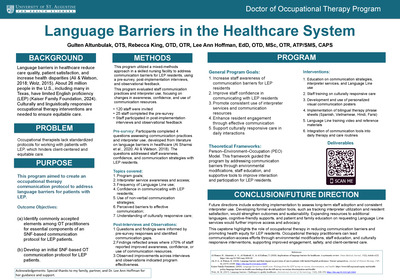
Language barriers in healthcare negatively impact quality of care, patient satisfaction, and health equity, particularly among individuals with limited English proficiency (LEP). This capstone program aimed to develop and implement an occupational therapy communication protocol to address language barriers in a skilled nursing facility. A mixed-methods approach was used, including a pre-survey of staff, post-implementation interviews, and observational feedback to evaluate communication practices, interpreter use, and staff confidence. A total of 25 staff members completed the pre-survey, with additional insights gathered through interviews and observations following implementation. Interventions included staff education on interpreter services and culturally responsive care, along with the development of bilingual communication tools, personalized resident posters, and a Language Line training video. The Person–Environment–Occupation (PEO) model guided the program by addressing environmental and occupational factors to improve communication and participation. Findings indicated increased staff awareness of language barriers, improved confidence in communication, and greater use of interpreter resources. This program highlights the importance of structured communication strategies in supporting LEP populations and demonstrates the role of occupational therapy in promoting equitable, client-centered care. Future efforts should focus on long-term evaluation of interpreter use, expansion of multilingual resources, and continued integration of communication protocols into routine practice.
-
Sensory-Friendly Environments in Schools
Jocelyn A. Ashworth and Rebecca King
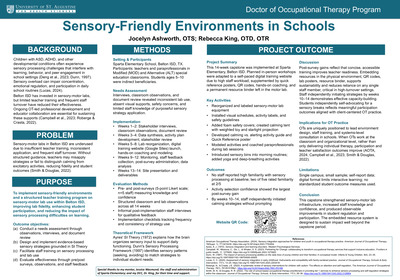
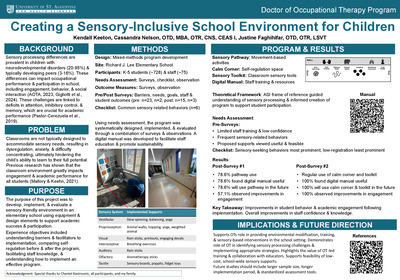
Sensory-Friendly Environments in Schools focuses on strengthening sensory-motor lab use and building educator understanding to support students with sensory processing difficulties. Implemented at Sparta Elementary School within Belton ISD, with the goal to enhance students' regulation, attention, and participation in daily school activities by equipping educators with practical, sustainable sensory strategies.
-
Bridging Cultures: Developing a Culturally Responsive Educational Website for Pediatric Service Providers
Aimun Aziz and Wendy Tremaine
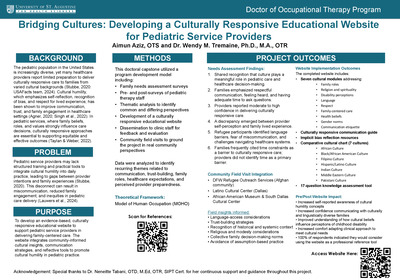
The increasing cultural diversity of the pediatric population in the United States highlights the need for culturally responsive, family-centered care. However, many providers report limited training and practical resources to support the integration of cultural humility into clinical practice. This capstone project aimed to develop and evaluate an evidence-based educational website to support pediatric service providers in delivering culturally responsive care.
A program development framework was used, incorporating family needs assessments, pre- and post-intervention surveys of pediatric therapy staff, and thematic analysis of key factors related to communication, trust, and provider preparedness. Community field visits with diverse populations informed the development of content grounded in lived experiences.
The resulting website included cultural modules, communication strategies, and reflective tools. Findings demonstrated increased provider awareness, improved communication confidence, and greater understanding of cultural influences on care. Participants also indicated strong intent to use the website as a clinical resource.
These findings support the use of accessible, community-informed educational tools to promote more equitable pediatric care.
-
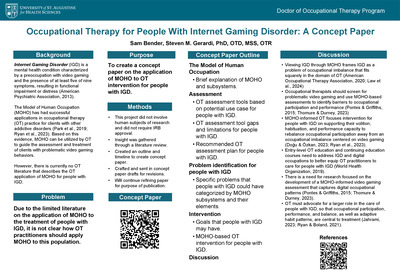
Occupational Therapy for People With Internet Gaming Disorder: A Concept Paper
Samuel R. Bender and Steven Gerardi
Internet Gaming Disorder (IGD) is associated with occupational imbalance and disrupted routines, contributing to challenges in occupational participation and performance. Due to there being a gap in occupational therapy-based research and guidance for people with IGD, this capstone project focused on the development of a concept paper informed by The Model of Human Occupation (MOHO) that frames problematic video gaming as an occupational issue. The concept paper organizes assessment strategies, identifies problems, outlines intervention ideas, and discusses potential next steps for assisting people with IGD within occupational therapy. This capstone project is intended to help current occupational therapists more effectively serve people with IGD in everyday practice.
-
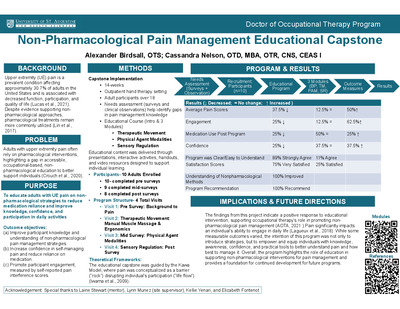
Non-Pharmacological Pain Management Educational Capstone
Alexander J. Birdsall and Cassandra Nelson
Upper extremity (UE) pain affects approximately 30.7% of adults in the United States and is associated with decreased function and participation. Despite evidence supporting non-pharmacological approaches, pharmacological interventions remain commonly used. This capstone project implemented and evaluated an occupation-based educational program to promote non-pharmacological pain management among adults receiving outpatient occupational therapy for UE conditions. This 14-week project included 10 participants and utilized a mixed-methods design with pre-, mid-, and post-surveys. The program consisted of an introduction and three modules addressing therapeutic movement, physical agent modalities, and sensory regulation. Outcome measures included pain, activity engagement, medication use, confidence, and program satisfaction. Results showed variable changes in pain, engagement, and medication use. However, educational outcomes were consistently positive, with high ratings of clarity, satisfaction, and recommendation. All participants demonstrated improved understanding of non-pharmacological strategies. These findings support occupational therapy’s role in delivering education-based, non-pharmacological pain management and highlight the value of education in improving knowledge, confidence, and participation in daily activities.
-
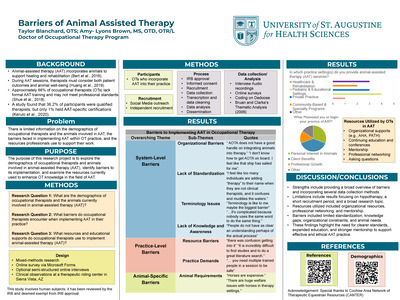
Barriers of Animal Assisted Therapy
Taylor Blanchard and Amy Lyons-Brown
This study employs a mixed-methods design, integrating online surveys, semi-structured interviews, and clinical observations to examine the use of animal-assisted therapy (AAT) within occupational therapy practice. The primary objectives are to characterize the demographics of occupational therapists and therapy animals engaged in AAT, identify barriers to its implementation, and evaluate the resources currently available to support practitioner knowledge and competency. By addressing these areas, the study seeks to clarify existing gaps in education and practice, with the broader goal of strengthening the evidence base and enhancing the accessibility, consistency, and impact of AAT in occupational therapy.
-
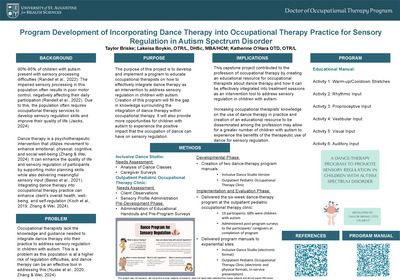
Program Development of Incorporating Dance Therapy Into Occupational Therapy Practice for Sensory Regulation in Autism Spectrum Disorder
Taylor Briske, Keisa Boykin, and Katherine O'Hara
The purpose of this project was to develop and implement a program to educate occupational therapists on how to effectively integrate dance therapy as an intervention to address sensory regulation in children with autism.
-
Life Skills for Individuals in a Juvenile Detention Center
Carrington Brown, Rebecca King, and Jaimee Fielder
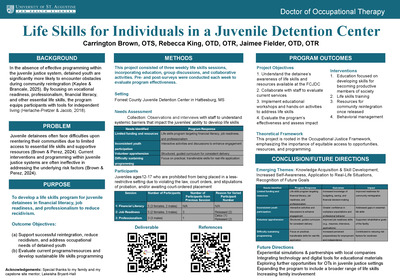
This capstone project involved developing, implementing, and evaluating a life skills program for justice-involved youth in a juvenile detention setting. Guided by a needs assessment, the program targeted financial literacy, job readiness, professionalism, and soft skills through structured sessions incorporating education, interactive activities, and group discussions. Findings from pre- and post-surveys and qualitative feedback indicated improved knowledge, confidence, and readiness for community reintegration, supporting the value of rehabilitative, occupation-based programming.
-
Cortical Visual Impairment (CVI) in Children: An Educational Video Series for Caregivers
Melody Brown and Zeida Gutierrez
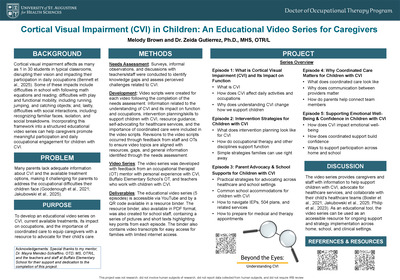
This capstone project focused on the development and dissemination of educational video series designed to increase awareness and understanding of CVI among parents, caregivers, and professionals. The project aimed to improve knowledge of CVI, support caregiver confidence in advocacy, and highlight the importance of coordinated care for children with CVI. Overall, the results of this project indicate that the video series was effective in increasing participant-reported understanding of CVI, confidence in supporting children, and awareness of available resources and interdisciplinary coordination. These findings support the use of accessible, video-based educational resources as a valuable tool for caregivers of CVI, and serve to reinforce the role of OT in providing education, supporting advocacy, and promoting participation for children with CVI.
-
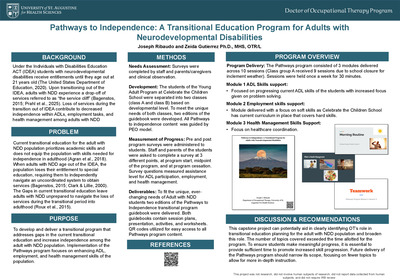
Enhancing Occupation-Based Engagement for Adults with IDD
Miranda Brown and Mary Jan Greer
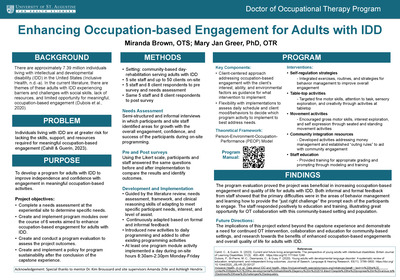
This study aimed to explore the importance of occupation-based engagement for adults with intellectual and developmental disabilities (IDD) through the lens of occupational therapy (OT). Literature review and needs assessments informed the development of client-centered interventions and program modules. Project outcomes highlighted the benefit of increased opportunity and appropriate grading of occupation-based engagement for adults with IDD, as well as education for community-based site staff and caregivers.
-
Maintaining Leisure Participation for Adults with Vision Loss
Kennedy Brumbelow and Rebecca Jo King
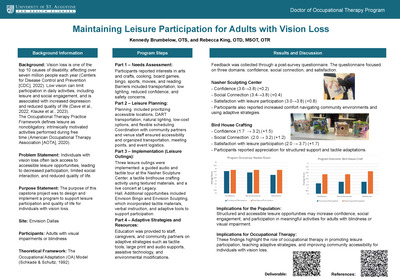
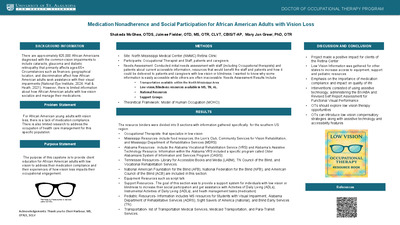
Vision loss can significantly limit participation in meaningful leisure activities, impacting overall quality of life. This capstone project explores strategies to support and maintain leisure participation in adults with vision loss by identifying common barriers and developing practical and accessible activities. A needs assessment revealed challenges including decreased accessibility, reduced confidence, and limited awareness of adaptive resources. In response, intervention strategies were developed focusing on activity modification, assistive technology, environmental adaptations, and client education. Findings emphasize the important role of occupational therapy in promoting continued engagement in leisure occupations and enhancing well-being for individuals with vision impairment.
-
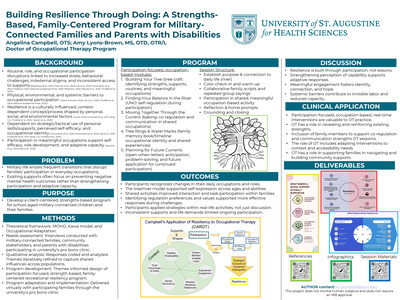
Building Resilience Through Doing: A Strengths-Based, Family-Centered Program for Military-Connected Families and Parents with Disabilities
Angelina Campbell and Amy Lyons-Brown
Resilience is often conceptualized as an individual trait that someone is born with or an outcome; however, this capstone project examined resilience as a dynamic process developed through participation in meaningful occupations within family contexts. This project explored the experiences of military-connected families and parents with disabilities to understand how contextual factors influence participation and adaptive capacity. A participation- and strength-based, family-centered intervention was developed and implemented with the school’s pro bono clinic, integrating principles of occupational therapy, including occupational adaptation and client-centered practice.
Findings indicated that resilience emerged through repeated engagement in meaningful activities, supported by relational safety, identity development, and opportunities for real-time adaptation. Systemic barriers, including institutional mistrust, accessibility challenges, and environmental instability, significantly impacted participation and required families to engage in substantial invisible labor. Interventions emphasizing experiential engagement, co-regulation, strengths-based reflection, including use of a visual tree-based tool adapted from the Model of Human Occupation (MOHO), were perceived as more meaningful and effective than discussion-based approaches. These findings informed the development of Campbell’s Application of Resiliency to Occupational Therapy (CAROT), a conceptual model illustrating resilience as an emergent outcome of sustained, participation-driven adaptation within dynamic contexts. This model positions participation as the primary mechanism through which adaptive response, occupational identity, and self-efficacy are developed and reinforced over time. This project highlights the role of occupational therapy in supporting resilience, not as a skill to be taught, but as a capacity developed through engagement in everyday life.
-
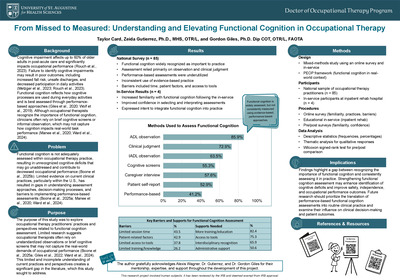
From Missed to Measured: Understanding and Elevating Functional Cognition in Occupational Therapy
Taylor Card, Zeida Gutierrez, and Gordon Giles
Functional cognition is critical to occupational performance but is often inconsistently assessed in occupational therapy practice. This mixed-methods study explored practitioners’ perspectives, assessment practices, and barriers across clinical settings. Findings revealed a reliance on observation over standardized, performance-based assessments, despite strong recognition of its importance. Barriers included time constraints, limited resources, and role ambiguity. Results highlight a gap between current practice and evidence-based approaches, supporting the need for increased education and improved access to practical assessment tools.
-
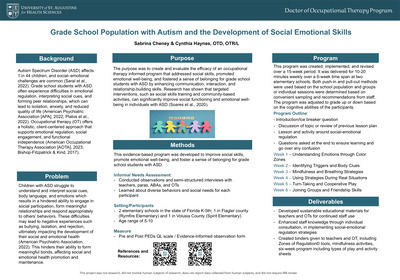
Grade School Population with Autism and the Development of Social Emotional Skills
Sabrina Cheney and Cynthia Haynes
The purpose was to create and evaluate the efficacy of an occupational therapy informed program that addressed social skills, promoted emotional well-being, and fostered a sense of belonging for grade school students with ASD by enhancing communication, interaction, and relationship-building skills.
-
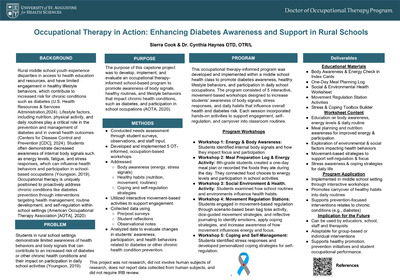
Occupational Therapy in Action: Enhancing Diabetes Awareness and Support in Rural Schools
Sierra Cook and Cynthia Haynes
The rising prevalence of type 2 diabetes among adolescents highlights the need for early prevention-focused interventions. This capstone project implemented an occupation-based program for middle school students targeting body awareness, nutrition, movement, and stress management. Five interactive workshops incorporated hands-on activities, including energy check-ins, meal planning, movement stations, and coping strategy development, to promote engagement and support the development of healthy routines.
-
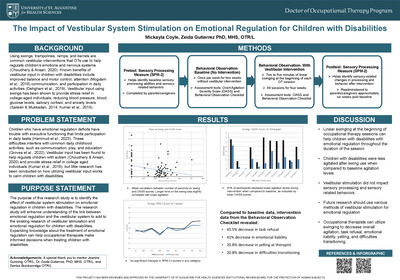
The Impact of Vestibular System Stimulation on Emotional Regulation for Children with Disabilities
Mickayla N. Coyle and Zeida Gutierrez
This capstone project is a mixed-methods research study that aimed to identify the impact of vestibular system stimulation on emotional regulation in children with disabilities. Throughout this research study, swing use was used as vestibular stimulation to identify its effectiveness in improving emotional regulation in children with disabilities. The study was conducted over the course of six weeks in a school-based setting.
-
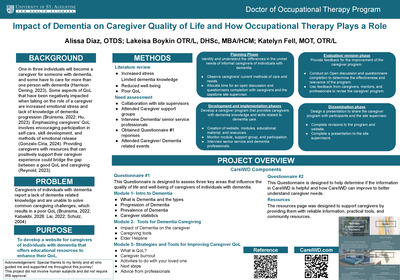
Impact of Dementia on Caregiver Quality of Life and How Occupational Therapy Plays a Role
Alissa Diaz, Lakeisa Boykin, and Katelyn Fell
The purpose of this project is to provide an occupation-based website that focuses on dementia related educational material, local and online resources, and training support to improve caregivers' QoL.
-
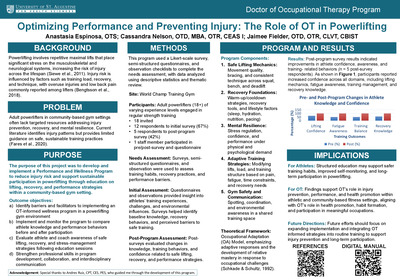
Optimizing Performance and Preventing Injury: The Role of OT in Powerlifting
Anastasia N. Espinosa, Cassandra M. Nelson, and Jaimee Fielder
Powerlifting is a high-intensity sport associated with increased risk of injury, particularly in community-based gym settings where structured education on recovery, injury prevention, and training strategies is limited. This capstone project aimed to develop and implement a Performance and Wellness Program to support safe and sustainable participation in powerlifting. A program development approach was used, including a needs assessment through surveys, questionnaires, and observation to identify gaps in training, recovery, and self-management practices. The program was delivered through structured, self-directed modules and supported by a digital manual to promote long-term use. Findings from post-program surveys indicated improvements in athlete confidence, awareness, and training-related behaviors, including increased use of recovery strategies and improved ability to manage training demands. These findings support the role of occupational therapy in promoting injury prevention, habit formation, and long-term participation in performance-based environments.
-
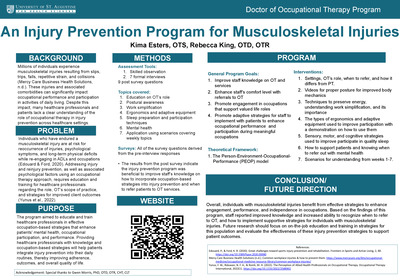
An Injury Prevention Program for Musculoskeletal Injuries
Kima Esters and Rebecca King
Musculoskeletal injuries pose a significant risk to occupational performance, participation, and overall well-being due to resulting functional deficits. Occupational therapists play a crucial role in managing these impairments and promoting independence to reduce the risk of reinjury, psychological symptoms, and long-term physical limitations while supporting re-engagement in activities of daily living and meaningful occupations. This injury prevention program focused on educating and training healthcare professionals in prevention and management strategies, including postural awareness, work simplification, ergonomics, adaptive equipment, mental health strategies for stress and anxiety management, and sleep preparation to improve patient outcomes and overall quality of life.
-
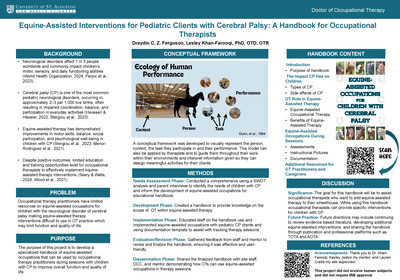
Equine-Assisted Interventions for Pediatric Clients with Cerebral Palsy: A Handbook for Occupational Therapists
Draydin Ferguson and Lesley Khan-Farooqi, PhD, OTD, OTR
This poster outlines the development of an evidence-informed instructional handbook intended to guide Occupational Therapists in implementing equine-assisted interventions with pediatric clients diagnosed with Cerebral Palsy.
-
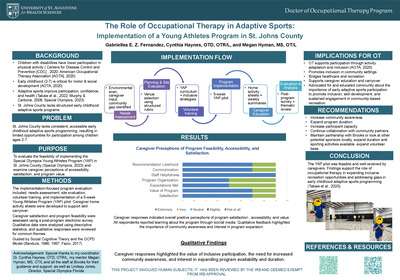
The Role of Occupational Therapy in Adaptive Sports: Implementation of a Young Athletes Program in St. Johns County
Gabriellea Elizabeth Zito Fernandez and Cynthia Haynes
This doctoral capstone project examined the feasibility and acceptability of implementing the Special Olympics Young Athletes Program (YAP) within St. Johns County, Florida, an area with limited early childhood adaptive sports opportunities. Grounded in Social Cognitive Theory and the occupation-centered program development model, the project aimed to support participation in inclusive recreation for children ages 2–7 with and without disabilities.
A comprehensive needs assessment, community resource mapping, and collaboration with Brooks Rehabilitation Adaptive Sports & Recreation informed program planning and implementation. A five-week YAP pilot program was conducted, focusing on foundational motor skill development through structured, play-based activities centered on baseball. Caregiver engagement was emphasized through the development of take-home resources to promote skill carryover into daily routines.
Program evaluation utilized a post-program caregiver survey to assess satisfaction, perceived benefits, and overall program feasibility. Findings indicated high caregiver satisfaction, increased awareness of adaptive sports opportunities, and perceived improvements in children’s motor skills and social participation. Environmental and logistical considerations, such as space constraints and variable attendance, were also identified.
Overall, results support the feasibility of implementing YAP in St. Johns County and highlight the role of occupational therapy in promoting inclusive, community-based recreational programming for young children with disabilities.
-
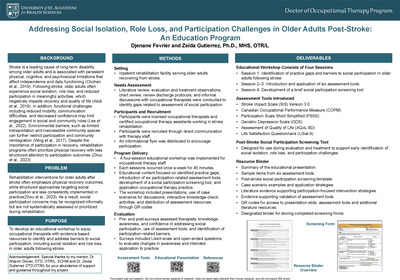
Addressing Social Isolation, Role Loss, and Participation Challenges in Older Adults Post-Stroke: An Education Program
Djenane Fevrier and Zeida Gutierrez
The purpose of the project was to develop four educational workshop to equip occupational therapists with resources to identify barriers to social participation such as social isolation, role loss, and participation challenges from the patient’s perspective in older adults. This capstone addresses a gap in current post-stroke care, where rehabilitation often prioritizes physical recovery while providing limited structured and evidence-based strategies to support social participation and role restoration. In response, four educational workshops were develop for occupational therapists highlighting findings from the needs assessments, review of six assessment tools, and building a screening tool to improved engagement in meaningful roles and social participation in older adults following a stroke.
-
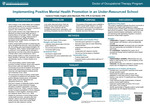
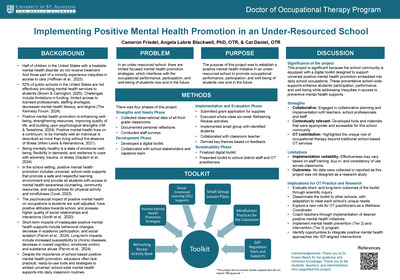
Implementing Positive Mental Health Promotion in an Under-Resourced School
Cameron M. Friedel, Angela Blackwell, and Cat Daniel
The realities of under-resourced schools, while often described in terms of constraint, also present a meaningful opportunity for schools to intentionally promote positive mental health. By recognizing and building upon students’ existing strengths and adaptive capacities, school-based initiatives can transform everyday environments and routines into contexts that foster regulation, inclusion, and well-being for all students now and in the future. The integration of positive mental health within a school system impacts the behavior, social-emotional learning (SEL) skills, and academic development of all students. Given this information a digital toolkit was created as a targeted, occupational therapy (OT) informed solution for a specific school community. The purpose of this poster is to describe the toolkit’s development, process, implementation, and impacts for OT practice in the school mental health setting.
-
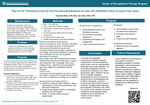
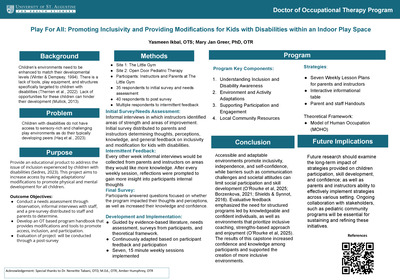
Play For All: Promoting Inclusivity and Providing Modifications for Kids with Disabilities within an Indoor Play Space
Yasmeen Ikbal and Mary Jan Greer
Children’s environments need to be enhanced to match their developmental levels (Winter & Dempsey, 1994). There is a lack of tools, play equipment, and structures specifically targeted to children with disabilities (Therrien et al., 2022). Lack of opportunities for these children can hinder their development (Mullick, 2013). This capstone intends to educate staff and parents on how to promote inclusivity by increasing their understanding of disabilities, creating accessible environments, adapting activities, and building confidence in supporting children with disabilities to participate in their occupations.
-
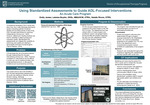
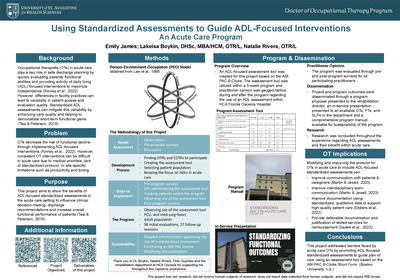
Using Standardized Assessments to Guide ADL-Focused Interventions
Emily James, Keisa Boykin, and Natalie Rivera
This project sought to address challenges faced by acute care OTs by promoting the use of ADL-focused standardized assessments as a clinical guide for ADL interventions. Challenges such as large caseloads, productivity demands, time constraints, and staffing shortages limit OTs contribution within the acute care setting. With acute care also being a fast-paced environment in which medical necessity can overshadow rehabilitative needs, OT is often undervalued and the focus is shifted on mobility over function. Although standardized assessments are not commonly used in acute care due to time limitations, this capstone project successfully piloted an assessment tool based on the AM-PAC 6-Clicks Short Form while focusing on practitioner opinion and providing education throughout the process to promote longevity and sustainability of the project. The deliverables of this project summarized the findings of the literature review as well as outcomes of program implementation to serve as educational materials for acute care settings and encourage future use of ADL-focused standardized assessments.
Printing is not supported at the primary Gallery Thumbnail page. Please first navigate to a specific Image before printing.