

Files
Download Full Text (1011 KB)
Description
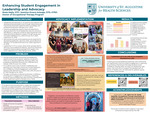
Occupational therapy has a unique capacity to foster social change and occupational justice. Leadership and advocacy are essential components of the daily academic practice for occupational therapists. However, leadership development within the field is largely socially driven, and students often lack access to structured, mentored pathways that would empower them to speak up and engage in advocacy. This capstone project aimed to fill this gap by addressing the shortage of coordinated mentorship and leadership development opportunities, which hinder advocacy efforts and professional growth. The study employed a mixed-methods approach, involving occupational therapy students in quantitative Likert-scale surveys and qualitative semi-structured interviews to explore motivation, routines, environment, performance, leadership awareness, identity, accountability, perceived barriers, and readiness for leadership. Descriptive statistics analyzed survey data (N = 17), while Braun and Clarke's (2006) thematic analysis was used for interview data (n = 3). Results indicated that students are interested in advocacy and leadership but face barriers such as limited time, fear, lack of information, role ambiguity, unclear guidance, and a desire for mentorship and organized opportunities. The study concluded that students are eager for advocacy but need clear pathways, practical support, encouragement, and opportunities aligned with their academic commitments. These insights led to the creation of ESLA, a structured leadership and advocacy program designed to enhance confidence, professional identity, and engagement in leadership among occupational therapy students.
Publication Date
Spring 2026
Publisher
University of St. Augustine for Health Sciences
Keywords
Occupational Therapy Students, Leadership Development, Advocacy, Mentorship, Professional Identity, Occupational Justice, Experiential Learning, Structured Leadership Pathways
Medical Subject Headings
Humans, Leadership, Mentors, Motivation, Occupational Therapy, Social Change, Time pressure, Uncertainty, Social Responsibility, Students, Social Justice, Fear
Disciplines
Medicine and Health Sciences | Occupational Therapy
Recommended Citation
Mejia, R. A., & Orozco Arteaga, J. (2026, April 1). Enhancing Student Engagement in Leadership and Advocacy. Poster presented at the Virtual OTD Capstone Symposium, University of St Augustine for Health Sciences. Retrieved from https://soar.usa.edu/otdcapstonesspring2026/55

Comments
Poster presented at the OTD Capstone Symposium held at the University of St. Augustine for Health Sciences on April 20, 2026