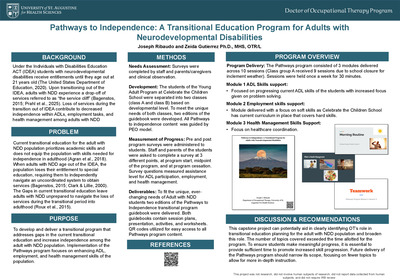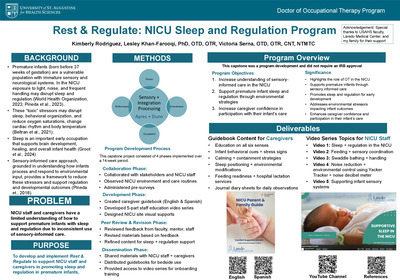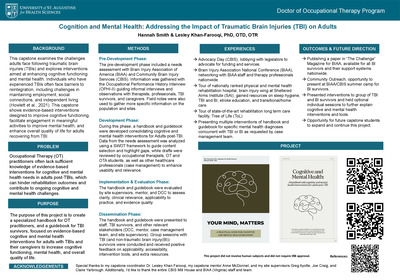

-
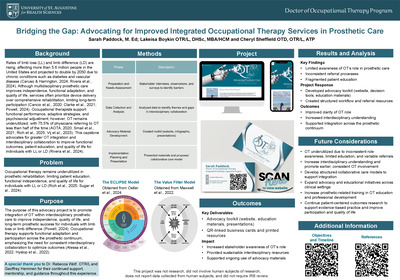
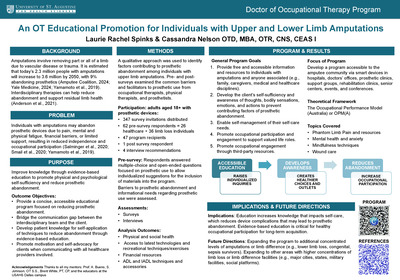
An OT Educational Program for Individuals with Upper and Lower Limb Amputations
Laurie R. Spinks Mrs and Cassandra Nelson
An OT approach to reducing prosthetic abandonment with an accessible guide to promote self sufficiency and community connections for individuals with amputations.
-
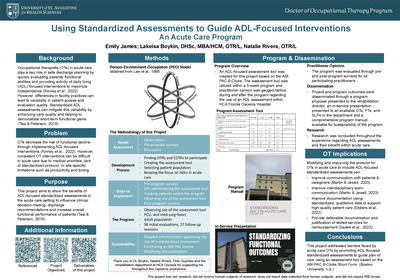
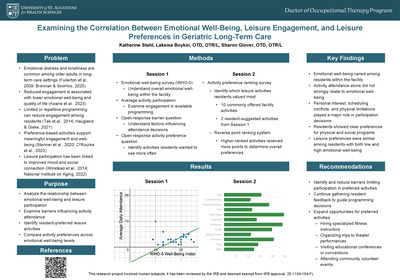
Examining the Correlation Between Emotional Well-Being, Leisure Engagement, and Leisure Preferences in Geriatric Long-Term Care
Katherine G. Stahl, Keisa Boykin, and Sharon Glover
This capstone project explores the relationship between emotional well-being, leisure participation, and activity preferences among older adults in an assisted living facility using a mixed-methods approach. Findings showed that participation frequency alone was not strongly associated with emotional well-being, as residents with varying levels of attendance reported similar well-being scores. Instead, factors such as personal interest, physical limitations, scheduling conflicts, and environmental preferences played a larger role in engagement. Residents preferred socially interactive and physically active activities, such as fitness classes and performances, and identified gaps in current programming where preferred activities were not consistently offered. Overall, the study highlights that meaningful, resident-centered leisure opportunities, rather than activity quantity, are key to supporting emotional well-being and reinforces the role of occupational therapy in promoting personalized, engaging programming.
-
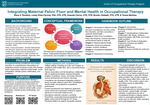
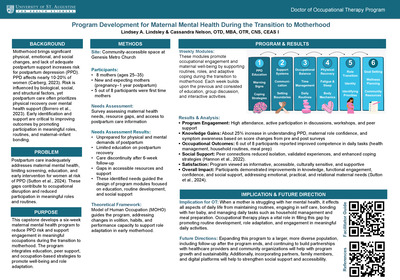
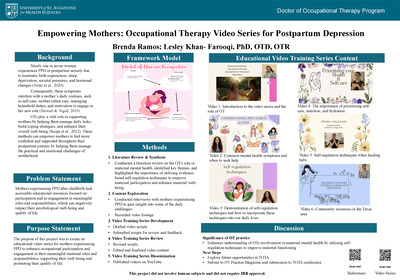
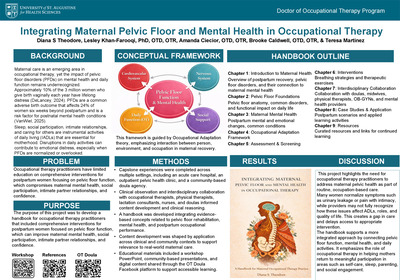
Integrating Maternal Pelvic Floor and Mental Health in Occupational Therapy
Diana S. Theodore, Lesley Sally Khan-Farooqi, Amanda Ciecior, Teresa Martinez, and Brooke Caldwell
This poster highlights an integrated occupational therapy approach to maternal pelvic floor and mental health. Postpartum recovery is often addressed in fragmented ways, separating physical symptoms from emotional and functional impact. This work emphasizes the connection between pelvic floor function, nervous system regulation, and daily activities. Drawing from clinical experiences across acute, outpatient, and community settings, this project presents practical, client-centered strategies to support recovery. Key areas include breathing, bowel and bladder health, and functional movement. By focusing on occupational performance, such as toileting, mobility, sleep, and caregiving. This approach demonstrates the role of occupational therapy in supporting whole-person postpartum recovery and bridging gaps in maternal care.
-
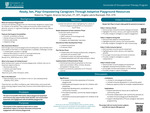
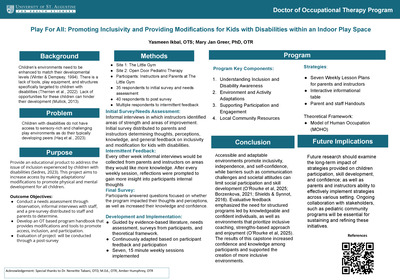
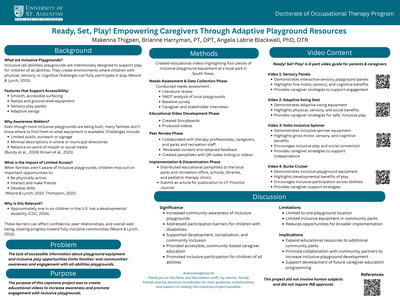
Ready, Set, Play! Empowering Caregivers Through Adaptive Playground Resources
Makenna Thigpen, Angela Blackwell, and Brianne Harryman
This doctoral capstone project addressed the need for accessible, caregiver-friendly education to support inclusive play opportunities for children of diverse abilities. Guided by occupational therapy frameworks emphasizing participation, environmental supports, and family-centered care, this project involved collaboration with the local Parks and Recreation Department to better understand community needs and existing inclusive playground resources. Through this partnership, the project supported efforts to promote awareness and accessibility of inclusive play spaces within the community.
As part of the project, educational video resources were developed to increase caregiver knowledge of inclusive playground equipment, play strategies, and environmental modifications. Content focused on promoting meaningful participation, supporting developmental skills, and reducing barriers to engagement in community play spaces. These educational materials provide sustainable, community-based resources that can be utilized by caregivers, educators, community organizations, and municipal departments to foster inclusive environments and support participation for children of all abilities.
-
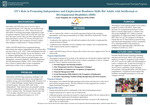
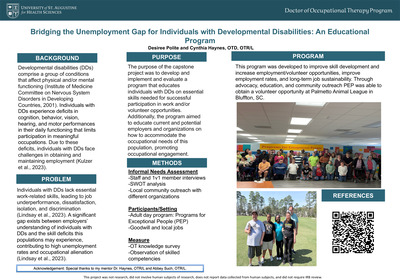
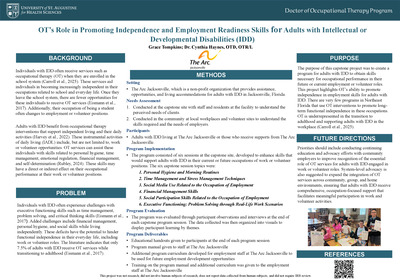
OT’s Role in Promoting Independence and Employment Readiness Skills for Adults with Intellectual or Developmental Disabilities (IDD)
Grace Tompkins and Cynthia Haynes
This capstone project is a six-week program that addresses OT's role in work readiness skills for adults with intellectual or developmental disabilities (IDD) who are living independently in Jacksonville, Florida. This program consisted of six group sessions with topics including social participation, time management, stress management, financial management, personal hygiene, and executive functioning.
-
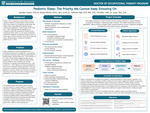
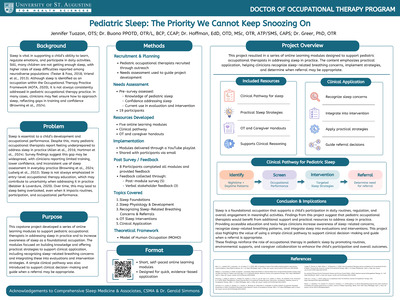
Pediatric Sleep: The Priority We Cannot Keep Snoozing On
Jennifer Q. Tuazon, Lee Ann Hoffman, and Amanda M. Buono
This capstone poster presents the development of online learning modules designed to support pediatric occupational therapists in addressing sleep as a foundational occupation. The project provides practical, evidence-based resources to help clinicians recognize sleep-related concerns, implement targeted strategies, and determine when referrals may be appropriate. The goal is to enhance clinical confidence while supporting participation, occupational performance, and quality of life for children and their families.
-
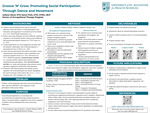
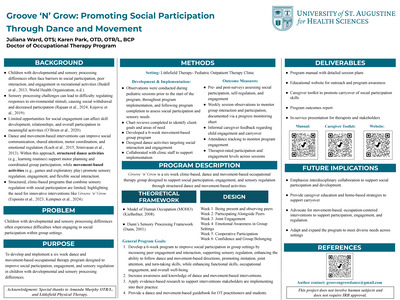
Groove ‘N’ Grow: Promoting Social Participation Through Dance and Movement
Juliana N. Ward and Karen Park
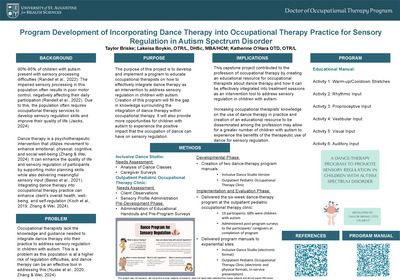
Groove ‘n’ Grow is a structured pediatric occupational therapy group program designed to improve social participation, engagement, and sensory regulation in children with developmental and sensory processing differences through dance and movement-based activities. The program was developed as part of an occupational therapy doctoral capstone project and implemented within a pediatric outpatient therapy clinic. The purpose of the program is to provide children with developmental and sensory processing differences opportunities to practice peer engagement, cooperative participation, emotional regulation, and emotional awareness in a supportive small-group environment.
-
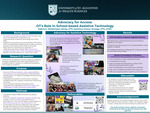
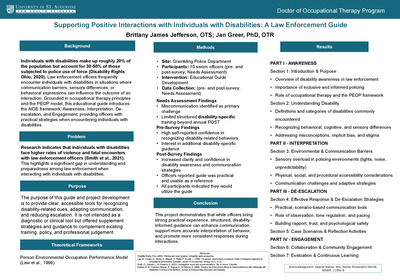
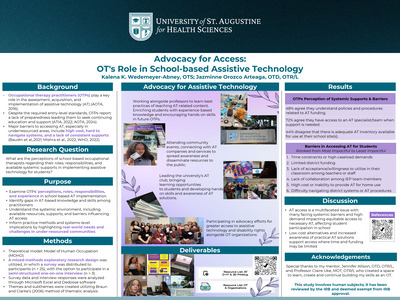
Advocacy for Access: OT's Role in School-based Assistive Technology
Kalena Wedemeyer-Abney and Jazminne Orozco Arteaga
This mixed-methods exploratory research study analyzes the experiences of school-based occupational therapy practitioners (OTPs) in the implementation of assistive technology (AT). The research examines their perceptions regarding their role and the responsibilities that come with it. This study is grounded in the Model of Human Occupation (MOHO) and seeks to understand the skill level and knowledge of practitioners, motivators to advocacy efforts, and the overall systemic environment, such as supports and barriers, that impact OTP's ability to acquire and implement assistive technology solutions. A mixed-method research survey was completed by 25 participants, with 3 participants also completing a 1-hour, optional semi-structured interview. Quantitative and qualitative data were analyzed utilizing Microsoft and Dedoose systems to gather descriptive statistics and analyze trends, along with thematic analysis using methods by Braun and Clarke. Findings suggest that OTPs have an important role in AT that is collaborative and grounded in advocacy. However, their ability to deliver AT-related interventions is affected by systemic barriers, including funding constraints, time constraints, high workloads, and challenging acquisition systems. Results also support the use of practical creations and low-cost alternatives to mitigate barriers and support the consistent delivery of solutions, especially in under-resourced communities.
-
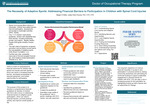
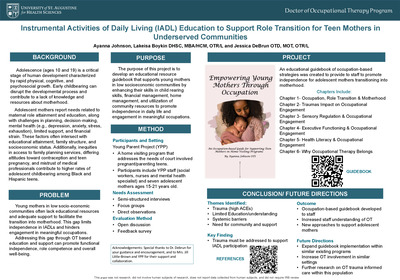
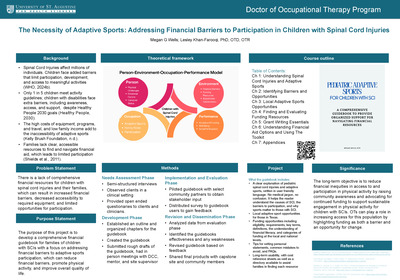
The Necessity of Adaptive Sports: Addressing Financial Barriers to Participation in Children with Spinal Cord Injuries
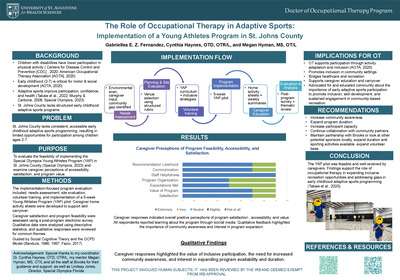
Megan G. Wells and Lesley Khan-Farooqi
Children with spinal cord injuries (SCI) face significant financial barriers that limit access to adaptive sports, despite the physical and psychosocial benefits of participation. This capstone project aimed to address this gap by developing a comprehensive financial resource guide for families. Guided by the Person-Environment-Occupation-Performance (PEOP) model, a needs assessment was conducted through semi-structured interviews, clinical observations, and stakeholder input, revealing a lack of accessible and centralized funding information. In response, a guidebook was created that includes educational content, local and national funding opportunities, and practical tools for navigating financial aid and grant applications. The guide was piloted and refined based on community feedback. This project highlights the role of occupational therapy in addressing social determinants of health (SDOH) and promoting equitable access to meaningful occupations. By improving access to financial resources, this project aims to increase participation in adaptive sports and enhance overall quality of life for children with SCI.
-
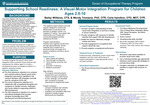
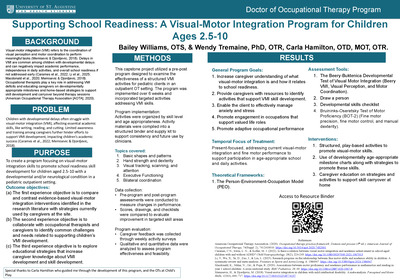
Supporting School Readiness: A Visual-Motor Integration Program for Children Ages 2.5-10
Bailey Williams, Wendy Tremaine, and Carla Hamilton
This capstone project focused on supporting school readiness through the development and implementation of a visual-motor integration (VMI) program for children ages 2.5–10 with developmental delays. A needs assessment was conducted to identify gaps in caregiver knowledge and resources related to VMI development. In response, a 6-week educational program was created, incorporating targeted activities and caregiver education to promote VMI skill development. Findings indicated improved caregiver understanding of VMI concepts and increased confidence in implementing strategies at home. These results highlight the importance of early intervention and caregiver involvement in supporting children’s academic readiness and overall developmental outcomes.
-
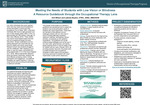
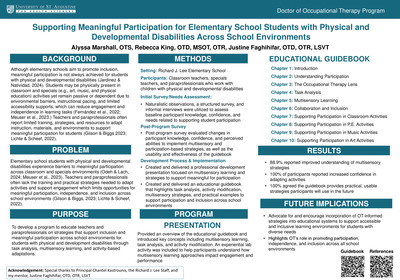
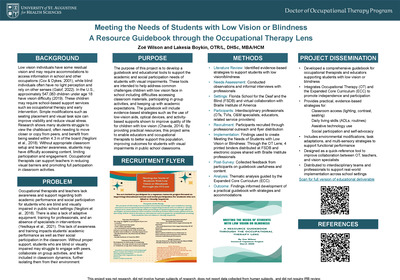
Meeting the Needs of Students with Low Vision or Blindness: A Resource Guidebook through the Occupational Therapy Lens
Zoe E. Wilson and Keisa Boykin
The purpose of this project is to develop a guidebook and educational tools to support the academic and social participation needs of students with visual impairments. These tools are intended to help address common challenges children with low vision face in school including difficulties accessing classroom materials, participating in group activities, and keeping up with academic expectations. The guidebook will include evidence-based strategies such as the use of low-vision aids, optical devices, and activity-based supports shown to improve quality of life for children with low vision. By providing practical resources, this project aims to enable educators and occupational therapists to better support this population, improving outcomes for students with visual impairments in public school classrooms.
Printing is not supported at the primary Gallery Thumbnail page. Please first navigate to a specific Image before printing.