
Files
Download Full Text (6.0 MB)
Description
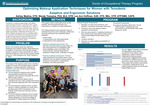
To enhance independence in makeup application for women utilizing a tenodesis grasp, Ashley Medina, OTS, in collaboration with Able Faith, Inc., developed and presented a capstone poster outlining a targeted program of adaptive strategies and ergonomic solutions. This program was designed to address the unique functional challenges experienced by women with spinal cord injuries (SCIs) while promoting autonomy and confidence in daily self-care routines.
The experience objectives included: (1) identifying existing adaptive equipment that supports individuals with SCIs in completing makeup application tasks; (2) examining and understanding the roles of interdisciplinary team members working with individuals with SCI in comparison to occupational therapy; (3) comparing barriers to makeup application for women with tenodesis grasp reported in current literature with findings gathered through semi-structured interviews with site participants; and (4) increasing awareness and utilization of self-care evaluations to strengthen knowledge of appropriate occupational therapy assessment methods. These objectives guided both the development and evaluation of the program.
Key project deliverables included a comprehensive digital manual that supports both implementation and long-term sustainability of the program. The manual provides education on proper positioning, energy conservation, and joint protection techniques to reduce strain and improve efficiency. It also includes detailed instruction on the use of adaptive equipment, caregiver education to promote appropriate assistance while maintaining client independence, and step-by-step video demonstrations illustrating how to modify the makeup routine. Additionally, a curated list of recommended tools, including cost breakdowns and purchasing links, was provided to improve accessibility and ease of replication.
Overall, this program demonstrates how occupational therapy interventions can effectively bridge the gap between physical limitations and functional independence through the integration of adaptive equipment and client-centered strategies (American Occupational Therapy Association [AOTA], 2020). Furthermore, it highlights the importance of addressing meaningful and often overlooked activities of daily living, such as makeup application, to support identity, self-esteem, and quality of life. By promoting inclusive and adaptive approaches to self-care, this program contributes to a more holistic understanding of independence and participation for individuals with SCIs.
Publication Date
Spring 4-2026
Publisher
University of St. Augustine for Health Sciences
Keywords
Women, Tenodesis grasp, Ergonomic, Activities of daily living, Occupational therapy, Makeup, Quality of life, Grooming, Adaptive, Goal
Medical Subject Headings
Tenodesis grasp, Quality of life, Grooming, Occupational therapy, Activities of daily living
Disciplines
Art and Design | Disability and Equity in Education | Occupational Therapy
Recommended Citation
Medina, A. J., Tremaine, W., & Hoffman, L. (2026, April 1). Optimizing Makeup Application Techniques for Women with Tenodesis: Adaptations and Ergonomic Solutions. Poster presented at the Virtual OTD Capstone Symposium, University of St Augustine for Health Sciences. Retrieved from https://soar.usa.edu/otdcapstonesspring2026/8
Included in
Art and Design Commons, Disability and Equity in Education Commons, Occupational Therapy Commons

Comments
Poster presented at the OTD Capstone Symposium, held at the University of St. Augustine for Health Sciences April 22, 2026.