-
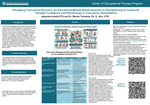
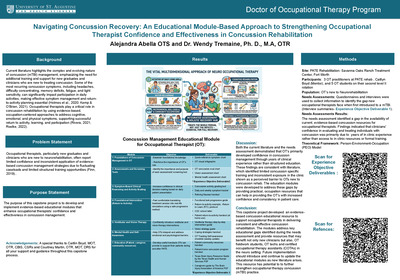
Navigating Concussion Recovery: An Educational Module-Based Approach to Strengthening Occupational Therapist Confidence and Effectiveness in Concussion Rehabilitation
Alejandra Abella and Wendy Tremaine
Background: Mild traumatic brain injury (mTBI), commonly known as concussion, presents with complex physical, cognitive, visual, vestibular, and emotional symptoms that can significantly affect an individual's ability to participate in meaningful daily occupations. Although occupational therapists play an essential role in concussion rehabilitation, many clinicians report that confidence in evaluating and treating this population develops primarily through years of clinical experience rather than structured education. Inconsistent exposure to concussion cases and limited access to current evidence-based resources contribute to variations in clinical confidence and practice.
Purpose: The purpose of this doctoral capstone project was to develop and implement a comprehensive educational program designed to strengthen occupational therapists' confidence, clinical knowledge, and effectiveness in concussion rehabilitation through evidence-based educational modules and practical clinical resources.
Methods: A needs assessment was conducted using clinician interviews, observations, and surveys within a neurorehabilitation setting to identify knowledge gaps and educational priorities. Findings informed the development of educational modules covering concussion symptom presentation, screening and assessment tools, evidence-based interventions, return-to-learn and return-to-activity guidelines, clinical decision-making, caregiver education, and community resources. Additional clinician resources, including patient education handouts, symptom trackers, visual and vestibular intervention guides, and clinical reference tools, were created to support implementation.
Results: The needs assessment revealed that occupational therapists largely attributed confidence in concussion management to years of clinical experience, while identifying a need for accessible, evidence-based educational resources. Because no newly hired occupational therapists entered the neurorehabilitation setting during the implementation period, post-implementation evaluation focused on the perceived future value of the educational program. Current occupational therapists reported that the educational modules would serve as a valuable onboarding resource by increasing future clinicians' confidence, clinical preparedness, and consistency in concussion management. The resources also demonstrated immediate value in supporting occupational therapy fieldwork students during clinical education.
Conclusion: This capstone project addressed an identified educational gap by developing a practical, evidence-based concussion education program for occupational therapists. The educational modules have the potential to improve clinician preparedness, promote greater consistency in concussion rehabilitation, and enhance the integration of current evidence-based practice into occupational therapy services. Future implementation with newly hired clinicians will further evaluate the program's impact on clinician confidence and patient care outcomes.
-
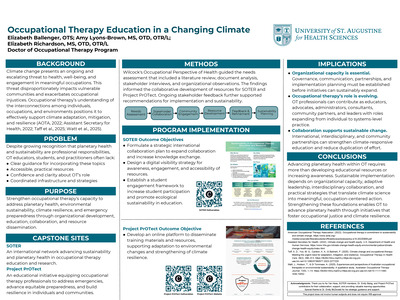
Occupational Therapy Education in a Changing Climate
Elizabeth Ballenger, Amy Lyons-Brown, and Elizabeth Richardson
This doctoral capstone explored how occupational therapy can strengthen its response to climate change and planetary health through education, collaboration, and organizational development. In partnership with SOTER and Project PrOTect, the project used literature review, needs assessment, stakeholder engagement, and interdisciplinary learning to develop strategic frameworks, educational resources, and digital dissemination tools. The project emphasized building organizational capacity, expanding occupational therapy’s role in planetary health, and leveraging international collaboration to support sustainable, occupation-centered action.
-
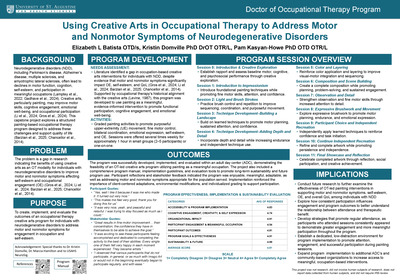
Using Creative Arts in Occupational Therapy to Address Motor and Nonmotor Symptoms of Neurodegenerative Disorders
Elizabeth L. Batista, Kristin Domville, and Pam Kasyan-Howe
Neurodegenerative disorders (NDD), including Parkinson's disease, Alzheimer's disease, multiple sclerosis, and amyotrophic lateral sclerosis, significantly impact motor function, cognition, self-esteem, and occupational engagement. Although creative arts interventions have demonstrated psychosocial benefits, there is limited research examining visual arts as an occupational therapy-led modality addressing both motor and nonmotor symptoms through meaningful occupation (Gros et al., 2024; Li et al., 2024; Chancellor et al., 2014).
This capstone project developed and implemented an OT-led creative arts program utilizing painting as the primary intervention for individuals with NDD residing in an assisted living facility and/or attending an adult day center. Guided by MOHO, the program incorporated structured Impressionist-inspired painting activities targeting fine motor control, bilateral coordination, cognitive engagement, emotional expression, and social participation. Sessions used graded adaptations to support varying cognitive and motor abilities while promoting sustained participation and self-expression.
Participants demonstrated increased confidence, emotional expression, and willingness to engage in meaningful activity. The adaptable nature of Impressionist painting techniques reduced pressure for perfection and encouraged success despite physical or cognitive limitations. It also promoted attention, sequencing, and social interaction within a supportive environment. Additionally, the project reinforced OT's historical connection to the Arts and Crafts Movement and the therapeutic value of creative occupation (Levine, 1987). This project contributes to the importance of integrating creative arts as a modality in occupational therapy interventions with individuals with NDD. -
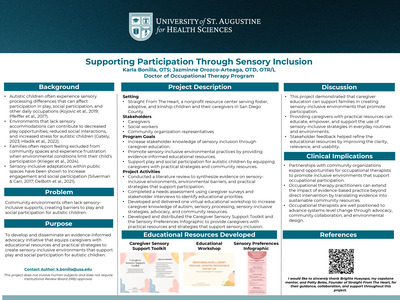
Supporting Participation Through Sensory Inclusion
Karla Bonilla and Jazminne Orozco Arteaga
This capstone project focused on promoting sensory-inclusive environments to support play and social participation among autistic children. The project was conducted in partnership with Straight From The Heart, a foster care organization in San Diego County. A community profile, literature review, and needs assessment were completed using caregiver and social worker surveys and semi-structured interviews with community organization professionals to identify environmental barriers, caregiver education needs, and resource priorities. The findings informed the development of sensory-inclusive educational resources and educational workshop. Stakeholder feedback was used to refine the resources and evaluate their perceived relevance and usefulness. The project highlights the role of occupational therapy in addressing environmental barriers and supporting participation through caregiver education, advocacy, and sensory-inclusive community resources.
-
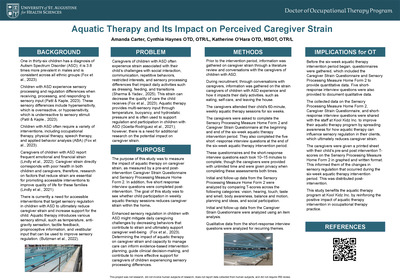
Aquatic Therapy and Its Impact on Perceived Caregiver Strain
Amanda J. Carter, Cynthia Haynes, and Katherine O'Hara
Children with Autism Spectrum Disorder (ASD) frequently experience sensory dysregulation that significantly impairs their participation in daily occupations and increases caregiver strain (Lawson et al., 2020; Passarello et al., 2022). Although aquatic therapy has shown promise in improving sensory processing, motor skills, and social participation, there is limited research examining its specific impact on the caregivers’ ability to provide support at home (Butzman et al., 2022; Caputo et al., 2018; Güeita-Rodríguez et al., 2021).
This study is a mixed-methods, quasi-experimental pre/post-design. This study sought to investigate the impact of six weeks of aquatic therapy intervention on sensory regulation and its correlation to caregiver strain. Aquatic therapy intervention sessions were administered by a licensed occupational therapist and aligned with the four quadrants in Dunn’s Model of Sensory Processing: sensory registration, sensory seeking, sensory sensitivity, and sensory avoiding.
-
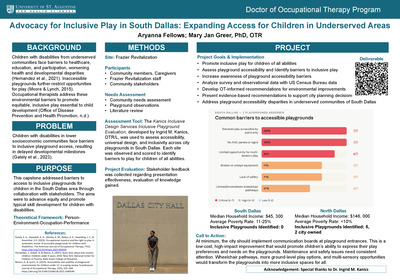
Advocacy for Inclusive Play in South Dallas: Expanding Access for Children in Underserved Areas
Aryanna Fellows and Mary Jan Greer
This capstone project aimed to advocate for more inclusive and accessible playgrounds for children of all abilities in underserved communities in South Dallas. Guided by the Person-Environment-Occupation-Performance (PEOP) Model, the project evaluated playground accessibility and identified environmental barriers that limit participation for children with disabilities. Methods included a community needs assessment, playground observations using a standardized accessibility assessment tool, surveys, and stakeholder collaboration. Participants included community members, caregivers, organizational stakeholders, and children who utilize local playgrounds. Findings were synthesized to develop evidence-based recommendations and educational resources to support future playground improvements. The expected outcomes included increased awareness of inclusive playground design, recommendations for community and city stakeholders, and advocacy efforts to promote equitable access to meaningful play for all children.
-
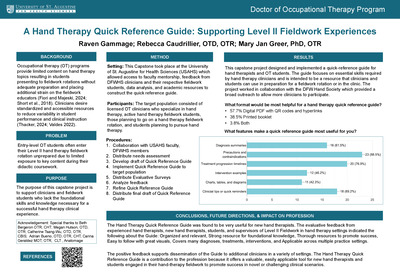
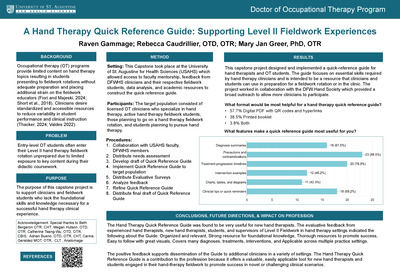
A Hand Therapy Quick Reference Guide: Supporting Level II Fieldwork Experiences
Raven I. Gammage, Rebecca Caudrillier, and Mary Greer
Occupational therapy students often begin Level II hand therapy fieldwork with limited preparation. This capstone project developed a Hand Therapy Quick Reference Guide to support students and clinicians with foundational knowledge and clinical resources. Evaluative feedback from hand therapists, fieldwork educators, and students indicated the guide was organized, practical, and applicable across clinical settings. The guide has the potential to improve fieldwork preparedness and support success in hand therapy practice.
-
A Hand Therapy Quick Reference Guide: Supporting Level II Fieldwork Experiences
Raven I. Gammage, Rebecca Caudrillier, and Mary Greer
Occupational therapy students often begin Level II hand therapy fieldwork with limited preparation. This capstone project developed an evidence-informed Hand Therapy Quick Reference Guide to support students and clinicians with foundational knowledge and clinical resources. Following implementation, feedback from hand therapists, fieldwork educators, and students indicated the guide was organized, practical, and applicable across clinical settings. The guide has the potential to improve fieldwork preparedness and support successful entry into hand therapy practice.
-
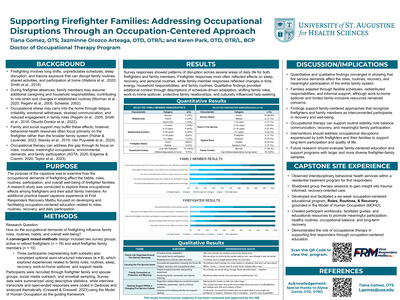
Supporting Firefighter Families: Addressing Occupational Disruptions Through an Occupation-Centered Approach
Tiana M. Gomez, Jazminne Orozco Arteaga, and Karen Park
Firefighting involves long shifts, unpredictable schedules, sleep disruption, and repeated exposure to occupational stressors that may affect not only firefighters but also their families. This doctoral capstone examined how the occupational demands of firefighting influence family roles, routines, habits, participation, and overall well-being. A convergent mixed-methods study included active or retired firefighters (n = 18) and adult firefighter family members (n = 10), with three participants also completing optional semi-structured interviews. Quantitative survey data were analyzed descriptively, while interview transcripts and open-ended responses were analyzed thematically using the Model of Human Occupation as a guiding framework. Findings demonstrated disruptions in sleep, recovery, family routines, household responsibilities, and meaningful participation. Qualitative findings further identified schedule-driven adaptation, redistribution of family roles, work-to-home spillover, the protective role of family connection, and changing attitudes toward help-seeking within fire service culture. Quantitative and qualitative findings converged in demonstrating that fire service demands influence the occupational participation of both firefighters and family members. A separate practice-based capstone experience at First Responders Recovery Malibu included development and facilitation of a six-week occupation-centered educational program, Roles, Routines, & Recovery, for first responders in residential treatment.
-
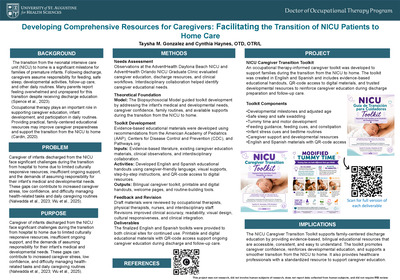
Developing Comprehensive Resources for Caregivers: Facilitating the Transition of NICU Patients to Home Care
Taysha M. Gonzalez and Cynthia Haynes
This doctoral capstone project developed a comprehensive, occupational therapy-informed NICU Caregiver Transition Toolkit to support families as they transition from the neonatal intensive care unit (NICU) to home. The project used clinical observations at the AdventHealth Daytona Beach NICU and AdventHealth Orlando NICU Graduate Clinic, a review of evidence-based literature and existing caregiver education materials, and interdisciplinary collaboration to identify caregiver education needs and guide toolkit development. Educational materials were created in English and Spanish using caregiver-friendly language, visual supports, step-by-step instructions, and QR-code access to digital resources. Draft materials were reviewed by occupational therapists, physical therapists, nurses, and other interdisciplinary staff and revised for clinical accuracy, readability, cultural responsiveness, visual design, and clinical integration.
-
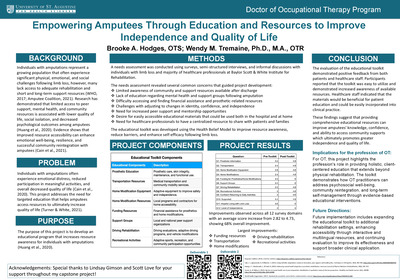
Empowering Amputees Through Education and Resources to Improve Independence and Quality of Life
Brooke A. Hodges and Wendy M. Tremaine
This doctoral capstone project aimed to develop and implement an evidence-based educational toolkit to increase community resource awareness for individuals with amputations. The project was completed at Baylor Scott & White Institute for Rehabilitation in Dallas, Texas, and involved adult patients with limb loss and rehabilitation healthcare professionals. A needs assessment was conducted using surveys, semi-structured interviews, and informal discussions to identify educational gaps and resource needs. Findings informed the development of educational materials addressing mental health, peer support, financial assistance, transportation, driving rehabilitation, home modifications, adaptive recreation, prosthetic resources, and community organizations. The toolkit was designed to accommodate varying health literacy levels and implemented during inpatient rehabilitation. Expected outcomes included increased patient awareness of available resources, improved self-efficacy, enhanced community reintegration, and greater confidence among healthcare providers in delivering standardized, comprehensive patient education.
-
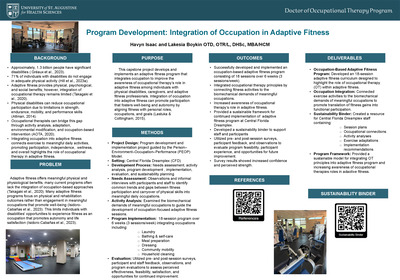
Program Development: Integration of Occupation in Adaptive Fitness
Havyn A. Isaac and Lakeisa Boykin
This project was a program development and implementation of an adaptive fitness program for individuals with physical disabilities that integrates occupation. This was done to bridge the gap between adaptive fitness and occupational therapy and highlight the role of occupational therapy in adaptive fitness settings. A needs assessment and activity analysis were completed and used to develop the weekly sessions throughout implementation. The implementation phase was over 6 weeks, with 3 sessions a week. Each week had an occupational focus that was identified and broken down with the activity analysis. The program highlighted the role of occupational therapy in adaotive fitness.
-
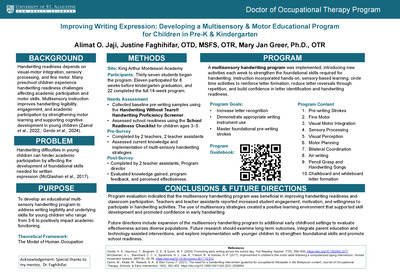
Improving Writing Expression: Developing a Multisensory & Motor Educational Program for Children in Pre-K and Kindergarten
Alimat Jaji, Jan Greer, and Justine Faghihfar
The purpose of this capstone project was to develop and implement a multisensory handwriting educational program designed to improve handwriting readiness and foundational writing skills in preschool children. The program was implemented in a Montessori preschool with 37 children between the ages of 3 and 6 years and provided teachers with evidence-based strategies to support handwriting development through multisensory, play-based activities targeting fine motor skills, visual-motor integration, motor planning, and sensory processing. Expected outcomes included increased student engagement in handwriting activities, improved foundational handwriting skills, enhanced teacher confidence in implementing multi-sensory strategies, and the establishment of sustainable handwriting practices within the classroom.
-
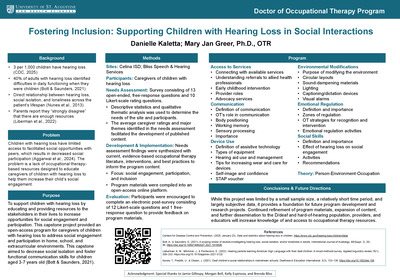
Fostering Inclusion: Supporting Children with Hearing Loss in Social Interactions
Danielle Kaletta and Mary Jan Greer
This project provided an open-access online program for caregivers of children with hearing loss to facilitate social engagement. Qualitative methods were used to conduct a needs assessment and identify areas of concern, barriers, and limited resources that affect participation in social activities. Based on the needs assessment, a 6-module website was created and published. Occupational therapy-based evidence, research, interventions, and best practices were compiled and adapted to target identified areas. Participants reported overall favorable feedback, stating an increase in knowledge, confidence, and participation.
-
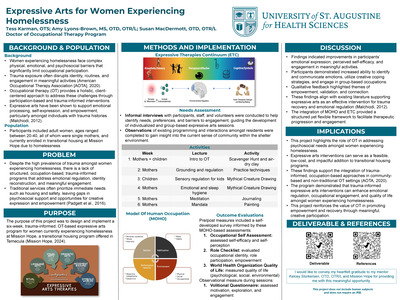
Expressive Arts for Women Experiencing Homelessness
Theresa G. Karman, Susan MacDermott, and Amy Lyons-Brown
Background: Women experiencing homelessness due to domestic violence face significant occupational disruptions, including challenges related to emotional regulation, identity, social participation, and engagement in meaningful occupations. Occupational therapy (OT) can support recovery by addressing these occupational needs through trauma-informed and occupation-centered interventions.
Purpose: This doctoral capstone project developed and implemented Express & Empower Studio, a six-week expressive arts program designed to promote emotional expression, self-efficacy, social participation, and engagement in meaningful occupations among women residing in a domestic violence shelter.
Methods: Program development was guided by the Model of Human Occupation (MOHO) and the Expressive Therapies Continuum (ETC) within a trauma-informed framework. A needs assessment informed program content, which incorporated creative expression, movement, mindfulness, journaling, meditation, and art-based activities. Pre- and post-program self-report surveys incorporated MOHO-informed measures addressing occupational engagement, roles, quality of life, stress, mood, and self-efficacy. Qualitative feedback was also collected to examine participants’ experiences.
Results: Participants demonstrated positive engagement with expressive and creative occupations and reported perceived benefits related to emotional expression, self-regulation, connection, and personal reflection. Findings supported the feasibility and perceived value of integrating expressive arts into OT programming within a shelter setting.
Conclusion: Express & Empower Studio demonstrates the potential for trauma-informed, occupation-based expressive arts programming to support meaningful participation and empowerment among women experiencing homelessness related to domestic violence. The project highlights an opportunity for OT practitioners to expand services addressing psychosocial and occupational needs within underserved populations.
-
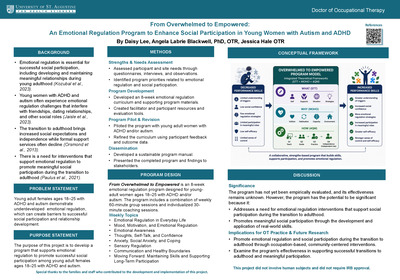
From Overwhelmed to Empowered: An Emotional Regulation Program to Enhance Social Participation in Young Women with Autism and ADHD
Daisy Lee; Angela Labrie Blackwell PhD, OTR; and Jessica Hale
From Overwhelmed to Empowered is a program developed an occupation-based emotional regulation program for young adult women with attention-deficit/hyperactivity disorder (ADHD) and/or autism spectrum disorder (ASD) during the transition to adulthood. The purpose of the project was to address the need for interventions that support emotional regulation as a foundation for meaningful social participation, independence, and successful role engagement.
The project involved the development and pilot implementation of an eight-week program consisting of weekly 60-minute group sessions and individualized coaching sessions. Program content focused on emotional awareness, mood and motivation, cognitive strategies, anxiety management, sensory regulation, communication, healthy boundaries, and long-term skill maintenance. The curriculum was informed by the Model of Human Occupation (MOHO), Schlossberg's Transition Theory, and the Four-Quadrant Model of Facilitated Learning (4QM).
The expected outcomes include improved emotional awareness, increased use of emotional regulation strategies, enhanced confidence in social situations, and greater participation in meaningful occupations. The project also provides occupational therapists with a structured, evidence-informed program that can be adapted for community and transition-to-adulthood settings.
-
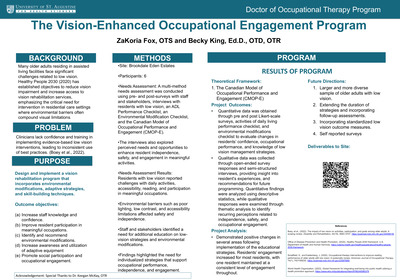
The Vision-Enhanced Occupational Engagement Program
ZaKoria Q Fox McElroy and Rebecca King
Background: Low vision is a significant concern among older adults and can affect independence, mobility, safety, social participation, and overall quality of life. As the aging population continues to grow, understanding the challenges experienced by older adults with low vision is increasingly important for improving supportive services and promoting healthy aging.
Purpose: This capstone project examined the experiences and needs of older adults living with low vision, with a focus on how vision loss and environmental factors may influence daily functioning, independence, and participation in meaningful occupations.
Methods: A multi-method needs assessment was completed to identify the needs of residents with low vision and the facility. The assessment included pre- and post-surveys, interviews with residents experiencing low vision, assessments of daily living performance, and evaluations of environmental modifications. The Canadian Model of Occupational Performance and Engagement (CMOP-E) was used to guide the project and examine the relationship between the person, their environment, and the occupations in which they want and need to participate. The needs assessment also incorporated input from staff and key stakeholders to identify opportunities for education and environmental support.
Results: The needs assessment identified challenges among residents with low vision related to daily activities, accessibility, reading, and participation in meaningful occupations. Environmental barriers, including inadequate lighting and low contrast, also affected safety and independence. Staff and stakeholders identified a need for additional education related to low-vision strategies and environmental modifications to better support residents' participation and independence.
Conclusion: Older adults with low vision may experience challenges that extend beyond visual impairment and can substantially affect their independence, safety, and quality of life. The findings highlight the importance of addressing both individual and environmental factors when supporting older adults with low vision. Person-centered education, adaptive strategies, and environmental modifications may help promote autonomy, safety, and engagement in meaningful occupations.
-
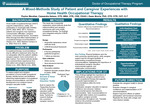
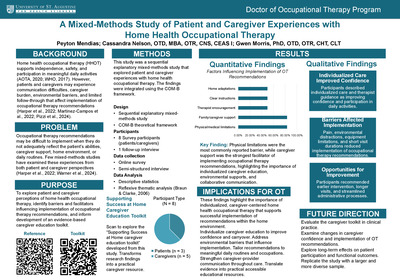
A Mixed-Methods Study of Patient and Caregiver Experiences with Home Health Occupational Therapy
Peyton A. Mendias, Cassandra Nelson, and Gwen Morris
Home health occupational therapy (HHOT) promotes independence and safety within the home, yet patients and caregivers often experience challenges implementing therapy recommendations after discharge. This mixed-methods study explored the lived experiences of patients and caregivers who participated in HHOT to identify barriers and facilitators to implementing occupational therapy recommendations and inform the development of a caregiver education toolkit. Adults who received HHOT within the previous six months and informal caregivers completed an online survey, with a subset participating in semi-structured interviews. Quantitative data were analyzed using descriptive statistics, and qualitative interview data were analyzed using reflexive thematic analysis. Findings emphasized the importance of clear therapist communication, individualized recommendations, caregiver involvement, and accessible educational resources to support successful implementation of occupational therapy strategies in the home. These findings informed the development of Supporting Success at Home, an evidence-based online caregiver education toolkit designed to improve understanding of HHOT, promote home safety, and support continued participation in meaningful daily activities. This study highlights the value of patient and caregiver-centered approaches to enhancing outcomes in home health occupational therapy.
-
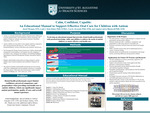
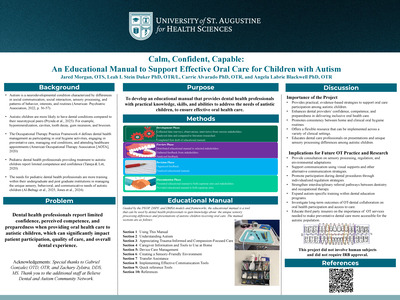
Calm, Confident, Capable: An Educational Manual to Support Effective Oral Care for Children with Autism
Jared D. Morgan, Leah I. Stein Duker, Carrie Alvarado, and Angela Labrie Blackwell
Dental health professionals report limited confidence, perceived competence, and preparedness when providing oral health care to autistic children, which can significantly impact patient participation, quality of care, and overall dental experience. Autistic children are more likely to have dental conditions compared to their neurotypical peers. The methods of this project consisted of four phases being development, preview, revision, and dissemination. The purpose of this project was to develop an educational manual that provides dental health professionals with practical knowledge, skills, and abilities to address the needs of autistic children, to ensure effective oral health care. The expected outcomes of this project was to increase dental health professionals' confidence, competence, and preparedness when treating autistic children.
-
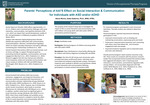
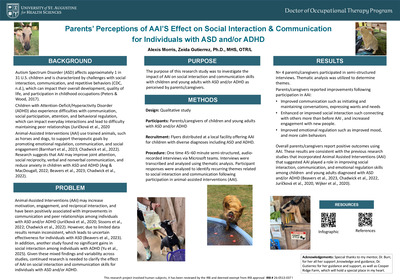
Parents’ Perceptions of AAI’S Effect on Social Interaction & Communication for Individuals with ASD and/or ADHD
Alexis E. Morris and Zeida Gutierrez
This research study will investigate the impact of animal-assisted interventions (AAI) on social interaction and communication skills of children or young adults formally diagnosed with autism spectrum disorder (ASD) and/or attention-deficit/hyperactivity disorder (ADHD) based on self or parent/caregiver report.
Children with ASD and ADHD experience deficits in communication and social participation that limit engagement in meaningful childhood occupations and peer relationships, highlighting the need for alternative, motivating intervention approaches. Animal-assisted interventions may provide a supportive and engaging environment that promotes emotional regulation, joint attention, and social reciprocity, and communication by enhancing participation in daily occupations.
The hypothesis for this study is that participation in a structured AAI program will result in improved social interaction and communication skills.
The study will use a qualitative research design. Parent/Caregiver interviews will be administered via microsoft teams platform. To assess caregivers' perceived report of changes in social participation and communication. -
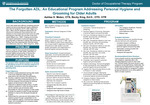
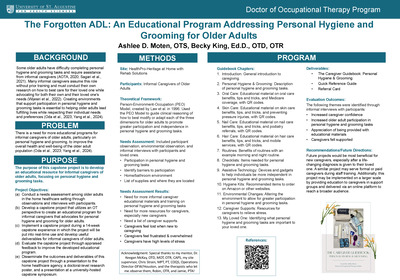
The Forgotten ADL: An Educational Program Addressing Personal Hygiene and Grooming for Older Adults
Ashlee D. Moten and Becky King
Some older adults have difficulty completing personal hygiene and grooming tasks independently and require assistance from an informal caregiver. However, informal caregivers often become stressed and overwhelmed due to limited educational resources and support available. These tasks include all oral, skin, nail, and hair care, such as brushing hair, applying deodorant, clipping nails, or brushing teeth (AOTA, 2020). OTs can help develop interventions to enhance participation in personal hygiene and grooming tasks. The purpose of this capstone project was to create an educational program to equip older adults and their informal caregivers with strategies for participating in personal hygiene and grooming tasks, thereby improving older adults' overall health and perceived quality of life while reducing informal caregivers' stress and burnout.
The capstone experience took place over a fourteen-week period and consisted of a needs assessment, development of an educational program, implementation, and evaluation on-site in Houston, Texas. Based on the needs assessment results, additional materials beyond personal hygiene and grooming were included, focusing on caregiver supports (e.g., a guidebook, a quick reference guide, and a referral card). The program's results showed that participants learned new information, appreciated the educational material, felt supported, and had increased confidence. Additionally, older adults had increased participation in personal hygiene and grooming tasks. This capstone project successfully provided informal caregivers of older adults with educational materials, improved the quality of life and overall well-being for informal caregivers and older adults, and reduced caregivers’ stress.
-
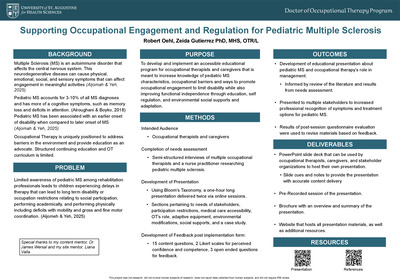
Supporting Occupational Engagement and Regulation for Pediatric Multiple Sclerosis
Robert E. Oehl 3rd and Zeida Gutierrez
Children diagnosed with pediatric multiple sclerosis (MS) can face cognitive, physical, and emotional symptoms. The symptoms they experience can be barriers to participation in occupations and activities of daily living. For occupational therapy, there is very limited resources for pediatric MS specifically, and it is almost an unknown diagnosis. Occupational therapy in management can help ensure that children reach their developmental milestones in mobility, grasp, social, cognitive, and academic circles. This capstone project was meant to improve awareness and comprehensive treatment and resources through program development. The capstone experience resulted in a project featuring a webinar about pediatric MS and occupational therapy, as well as a program overview guide to aid in delivering the presentation. The project was delivered live and improved occupational therapist's knowledge and confidence in delivering interventions and assessments for this diagnosis.
-
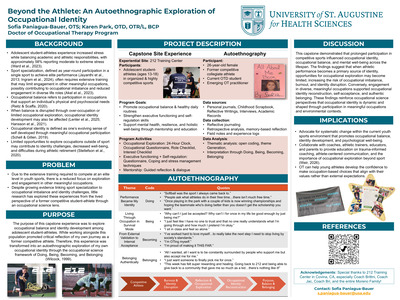
Beyond the Athlete: An Autoethnographic Exploration of Occupational Identity
Sofia Paniagua-Bauer and Karen Park
Adolescent student-athletes experience unique demands as they navigate the expectations of competitive sport alongside academic, social, and developmental responsibilities. These demands may influence mental health, executive functioning, occupational balance, and the development of occupational identity. The purpose of this Doctor of Occupational Therapy (OTD) capstone project was to explore the development of occupational identity through the lived experience of growing up as a competitive athlete and to examine how participation in sport influenced mental health, self-regulation, executive functioning, and engagement in meaningful occupations. An autoethnographic approach was used to reflect on my personal experiences while completing a capstone experience at a community-based nonprofit training center serving adolescent athletes. Data were gathered through reflective journaling, retrospective reflection, observation, open dialogue, and occupationally focused activities addressing time use, occupational roles, interests, executive functioning, and self-regulation. Experiences were organized and analyzed thematically using the occupational science framework of Doing, Being, Becoming, and Belonging. Expected outcomes include increased understanding of how competitive sport can shape occupational identity and influence adolescents’ ability to recognize and communicate their needs, establish healthy boundaries, regulate emotions, and engage in occupations beyond athletic performance. Findings are expected to highlight opportunities for occupational therapy practitioners to support adolescent student-athletes through trauma-informed, occupation-centered approaches that promote self-advocacy, autonomy, occupational balance, and sustainable participation in sport and other meaningful life occupations.
-
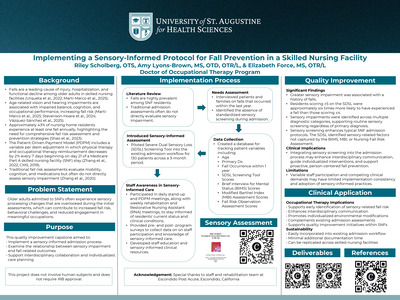
Implementing a Sensory-Informed Protocol for Fall Prevention in a Skilled Nursing Facility
Riley R. Scholberg, Amy Lyons-Brown, and Elizabeth Force
This capstone project developed and implemented a sensory-informed admission protocol to support fall prevention at a skilled nursing facility. The development of this protocol aimed to improve the early identification of vision and hearing impairments and integrate sensory considerations into resident care planning and fall prevention. Participants included newly admitted residents and interdisciplinary staff members from rehabilitation, nursing, and administration. Methods included administering the Screening for Severe Dual Sensory Loss (SDSL), reviewing resident characteristics and fall-related indicators, educating staff on sensory-informed care, and developing practical resources to support consistent screening, documentation, and intervention. Expected outcomes included increased staff knowledge, improved screening and documentation practices, greater interdisciplinary communication, and more individualized environmental and occupational strategies to promote resident safety, participation, and quality of life. The project highlights occupational therapy’s role in addressing sensory factors that may affect functional performance and fall risk in skilled nursing facilities.
-
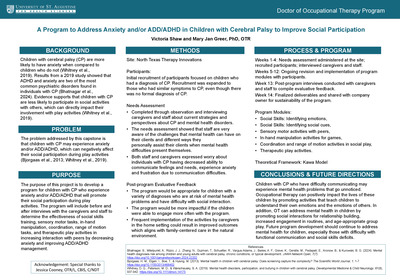
A Program to Address Anxiety and/or ADD/ADHD in Children with Cerebral Palsy to Improve Social Participation
Victoria Shaw and Mary Jan Greer
The purpose of this project was to develop a program for children with cerebral palsy, who experience anxiety and/or ADD/ADHD, that will promote their social participation during play activities. The program lasted for 14 weeks and had two participants, within those 14 weeks, several objectives were accomplished. These objectives include the administration of the needs assessment, implementation of the program modules, pre- and post-interviews with the caregivers and staff, and the finalization of the program. The expected outcome from the program was to determine the effectiveness of the different program modules increasing interactions with peers by decreasing anxiety and improving ADD/ADHD management.
Printing is not supported at the primary Gallery Thumbnail page. Please first navigate to a specific Image before printing.