

Files
Download Full Text (629 KB)
Description
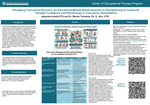
Background: Mild traumatic brain injury (mTBI), commonly known as concussion, presents with complex physical, cognitive, visual, vestibular, and emotional symptoms that can significantly affect an individual's ability to participate in meaningful daily occupations. Although occupational therapists play an essential role in concussion rehabilitation, many clinicians report that confidence in evaluating and treating this population develops primarily through years of clinical experience rather than structured education. Inconsistent exposure to concussion cases and limited access to current evidence-based resources contribute to variations in clinical confidence and practice.
Purpose: The purpose of this doctoral capstone project was to develop and implement a comprehensive educational program designed to strengthen occupational therapists' confidence, clinical knowledge, and effectiveness in concussion rehabilitation through evidence-based educational modules and practical clinical resources.
Methods: A needs assessment was conducted using clinician interviews, observations, and surveys within a neurorehabilitation setting to identify knowledge gaps and educational priorities. Findings informed the development of educational modules covering concussion symptom presentation, screening and assessment tools, evidence-based interventions, return-to-learn and return-to-activity guidelines, clinical decision-making, caregiver education, and community resources. Additional clinician resources, including patient education handouts, symptom trackers, visual and vestibular intervention guides, and clinical reference tools, were created to support implementation.
Results: The needs assessment revealed that occupational therapists largely attributed confidence in concussion management to years of clinical experience, while identifying a need for accessible, evidence-based educational resources. Because no newly hired occupational therapists entered the neurorehabilitation setting during the implementation period, post-implementation evaluation focused on the perceived future value of the educational program. Current occupational therapists reported that the educational modules would serve as a valuable onboarding resource by increasing future clinicians' confidence, clinical preparedness, and consistency in concussion management. The resources also demonstrated immediate value in supporting occupational therapy fieldwork students during clinical education.
Conclusion: This capstone project addressed an identified educational gap by developing a practical, evidence-based concussion education program for occupational therapists. The educational modules have the potential to improve clinician preparedness, promote greater consistency in concussion rehabilitation, and enhance the integration of current evidence-based practice into occupational therapy services. Future implementation with newly hired clinicians will further evaluate the program's impact on clinician confidence and patient care outcomes.
Publication Date
Summer 2026
Publisher
The University of St. Augustine for Health Sciences
Keywords
Concussion Management, mTBI, mTBI Education Module, Occupational Therapy, Neurorehabilitation
Medical Subject Headings
Neurorehabilation educational module on mTBI for occupational therapist
Disciplines
Occupational Therapy
Recommended Citation
Abella, A., & Tremaine, W. (2026, July 1). Navigating Concussion Recovery: An Educational Module-Based Approach to Strengthening Occupational Therapist Confidence and Effectiveness in Concussion Rehabilitation. Poster presented at the Virtual OTD Capstone Symposium, University of St Augustine for Health Sciences. Retrieved from https://soar.usa.edu/otdcapstonessummer2026/15

Comments
Poster presented at the OTD Capstone Symposium, held at the University of St. Augustine for Health Sciences.