

Files
Download Full Text (381 KB)
Description
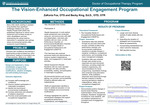
Background: Low vision is a significant concern among older adults and can affect independence, mobility, safety, social participation, and overall quality of life. As the aging population continues to grow, understanding the challenges experienced by older adults with low vision is increasingly important for improving supportive services and promoting healthy aging.
Purpose: This capstone project examined the experiences and needs of older adults living with low vision, with a focus on how vision loss and environmental factors may influence daily functioning, independence, and participation in meaningful occupations.
Methods: A multi-method needs assessment was completed to identify the needs of residents with low vision and the facility. The assessment included pre- and post-surveys, interviews with residents experiencing low vision, assessments of daily living performance, and evaluations of environmental modifications. The Canadian Model of Occupational Performance and Engagement (CMOP-E) was used to guide the project and examine the relationship between the person, their environment, and the occupations in which they want and need to participate. The needs assessment also incorporated input from staff and key stakeholders to identify opportunities for education and environmental support.
Results: The needs assessment identified challenges among residents with low vision related to daily activities, accessibility, reading, and participation in meaningful occupations. Environmental barriers, including inadequate lighting and low contrast, also affected safety and independence. Staff and stakeholders identified a need for additional education related to low-vision strategies and environmental modifications to better support residents' participation and independence.
Conclusion: Older adults with low vision may experience challenges that extend beyond visual impairment and can substantially affect their independence, safety, and quality of life. The findings highlight the importance of addressing both individual and environmental factors when supporting older adults with low vision. Person-centered education, adaptive strategies, and environmental modifications may help promote autonomy, safety, and engagement in meaningful occupations.
Publication Date
Summer 2026
Publisher
The University of St. Augustine for Health Sciences
Keywords
Low Vision, Older adults, visual impairments, independence, quality of life, aging
Medical Subject Headings
Low Vision, Older adults, visual impairments, independence, quality of life, aging
Disciplines
Occupational Therapy
Recommended Citation
McElroy, Z., & King, R. (2026, July 1). The Vision-Enhanced Occupational Engagement Program. Poster presented at the Virtual OTD Capstone Symposium, University of St Augustine for Health Sciences. Retrieved from https://soar.usa.edu/otdcapstonessummer2026/5

Comments
Poster presented at the OTD Capstone Symposium, held at the University of St. Augustine for Health Sciences.