

Files
Download Full Text (444 KB)
Description
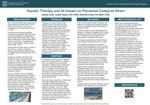
Children with Autism Spectrum Disorder (ASD) frequently experience sensory dysregulation that significantly impairs their participation in daily occupations and increases caregiver strain (Lawson et al., 2020; Passarello et al., 2022). Although aquatic therapy has shown promise in improving sensory processing, motor skills, and social participation, there is limited research examining its specific impact on the caregivers’ ability to provide support at home (Butzman et al., 2022; Caputo et al., 2018; Güeita-Rodríguez et al., 2021).
This study is a mixed-methods, quasi-experimental pre/post-design. This study sought to investigate the impact of six weeks of aquatic therapy intervention on sensory regulation and its correlation to caregiver strain. Aquatic therapy intervention sessions were administered by a licensed occupational therapist and aligned with the four quadrants in Dunn’s Model of Sensory Processing: sensory registration, sensory seeking, sensory sensitivity, and sensory avoiding.
Publication Date
Summer 8-7-2026
Publisher
University of St. Augustine for Health Sciences
Keywords
Aquatics, Sensory, Caregivers, Autism, Strain, Perceived, Pre-Test, Post-Test, Regulation, Intervention
Medical Subject Headings
Aquatic Therapy, Autism Spectrum Disorder, Caregiver, Occupational Therapy, Sensory Processing, Social Participation, Motor Skills, Children, Occupations, Activities of Daily Living
Disciplines
Occupational Therapy
Recommended Citation
Carter, A. J., Haynes, C., & O'Hara, K. (2026, August 7). Aquatic Therapy and Its Impact on Perceived Caregiver Strain. Poster presented at the Virtual OTD Capstone Symposium, University of St Augustine for Health Sciences. Retrieved from https://soar.usa.edu/otdcapstonessummer2026/20

Comments
Poster presented at the OTD Capstone Symposium, held at the University of St. Augustine for Health Sciences.